
Finding two long spine terms on a scan report can add stress before a visit. The wording gives little help with a basic question: what is causing the pain now? When doctors discuss spondylolysis vs spondylolisthesis, they ask whether the pars has fractured and whether a vertebra has moved. Pain location and walking time help show whether scan findings fit the symptoms now. During a hands-on exam, a doctor checks leg strength and reflexes for signs of nerve trouble. A short timeline shows when pain began and which movements bring it on.
Quick Answer: What Is the Difference?
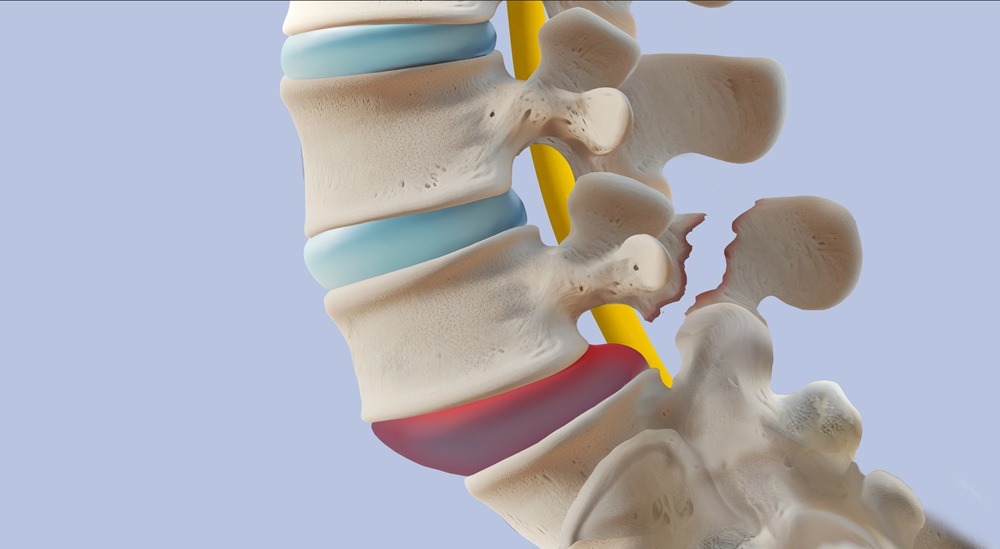
Spondylolysis describes a fracture through the pars interarticularis, a narrow bridge of bone behind a vertebra. With spondylolisthesis, one vertebra moves forward over the bone below. A scan may show a fracture, a slip, or both.
What the Scan Shows in Spondylolysis vs Spondylolisthesis
Behind each vertebra, the pars interarticularis forms a narrow bridge of bone. Repeated backbends and twists can stress the bone enough to cause a fracture. Doctors may call the injury spondylolysis, a pars fracture, or a pars defect. A fracture can affect one pars bridge or both pars bridges.
Spondylolisthesis means one vertebra has slipped forward over the bone below. Doctors use side-view X-rays to confirm spondylolisthesis and measure how far the vertebra moved. A pars fracture sometimes appears at the same level. Some reports show a fracture with no measured movement. When the pars fracture has allowed the vertebra to move, doctors call the slip isthmic spondylolisthesis. Disc wear can lead to degenerative spondylolisthesis later in life.
A Pars Fracture Can Be New or Longstanding
Backbends may hurt early in a pars injury before an X-ray shows a clear break. The American Academy of Orthopaedic Surgeons (AAOS) notes that MRI can detect a pars injury before it appears on X-ray. CT shows the fracture line and nearby bone in more detail.
An older pars defect sometimes appears on a scan years after it formed. Prior images show whether the finding was already present and whether the vertebra moved. A teen may feel pain during backbends, then sit through class the next day with little discomfort. An activity record shows which movement brought on pain and how long the pain lasted. Pain that began years later may come from a disc, facet joint, or nerve at the same level. MRI can show disc wear or nerve pressure beside the old defect.
How Spondylolysis vs Spondylolisthesis Symptoms Differ
Pain from a pars injury can stay in the low back and worsen with activity or extension. When a vertebral slip reduces room for a nerve root, pain may travel into a buttock or leg. A scan sometimes shows either condition in someone who has no pain. During an exam, a doctor checks whether the images explain the pain and limits on walking or sports.
Pars pain can resemble a pulled muscle across the low back, especially after running or jumping. Backbends may sharpen the ache, and tight hamstrings may accompany the pain. A symptom timeline should include a recent growth spurt and any increase in training. Disc or facet-joint pain may feel like pars pain. Specialists use back motion, leg strength, and reflexes to narrow the possible causes. A scan then helps the doctor check for a bone injury or nerve pressure.
Leg Weakness Changes the Urgency
When a slip narrows a nerve opening, walking may bring on leg pain, tingling, or numbness. A daily record can note how long a usual walk lasts before symptoms appear. Walking time may drop from twenty minutes to five between checks. A doctor may ask a spine surgeon to assess the change and compare both times at follow-up.
New or worsening leg weakness needs prompt medical review. Cleveland Clinic says to seek ER care after loss of feeling in the legs. Loss of bladder or bowel control also needs ER care. Back pain that lasts more than a few days or stops usual activity is a reason to see a doctor.
What X-Rays, MRI, and CT Show in Spondylolysis vs Spondylolisthesis
X-rays show alignment and the amount of slip. AAOS calls a slip high grade when it moves beyond half the width of the vertebra. A doctor can compare older films to see whether the slip has increased over time.
MRI shows discs, nerve roots, and signs of a recent stress injury. For a closer view of the pars and fracture line, a doctor may use CT. Two people with the same slip grade may walk different distances because nerve pressure and leg strength differ.
Treatment Depends on Injury Age and Nerve Findings
Treatment for spondylolysis vs spondylolisthesis depends on injury age and nerve findings. For a recent pars injury, care may begin with a break from backbends and other painful movements. Physical therapy can rebuild back and core strength before sports resume in stages. A doctor may also recommend medicine or a brace, then review pain and motion at follow-up.
With a low-grade slip, a spine specialist may watch alignment while treating pain and checking strength. Cleveland Clinic lists rest, medicine, and physical therapy among common nonsurgical options. Later X-rays show whether the vertebra has moved farther. New weakness or a shorter walking limit can change the plan even when the measured grade stays the same.
A surgeon may discuss an operation when pain remains severe, weakness grows, or nerve symptoms continue after nonsurgical care. AAOS describes pars repair as a motion-preserving option for some cases with less severe slippage. To stabilize the level and relieve nerve pressure, the surgeon may use transforaminal lumbar interbody fusion. Before consent, the surgeon should explain which scan finding and symptom the operation targets.
Questions to Ask While the Images Are on Screen
Can spondylolysis vs spondylolisthesis appear on the same scan?
Yes, a pars fracture and a vertebral slip can appear on the same scan. A doctor can point to each pars and show whether the vertebra moved on current or older films.
What does a chronic pars defect mean?
“Chronic” describes a fracture that has existed for some time. AAOS says a longer-term stress fracture has a low chance of healing, even after several months in a brace. A doctor can compare the old fracture with nearby discs, joints, and nerves on the same images.
What should someone ask before returning to sports?
Before sports resume, a return plan should state pain limits, strength goals, and allowed movements. A doctor may stage the return from partial drills to full practice. Written instructions should also list which symptom sends an athlete back for review.
What to Put Beside the Scan Report
A short symptom record can list when pain began and which movement brings it on. Standing and walking time belong on the same page. Bringing the scan files lets a spine doctor compare the report with the images on screen. A note might say, “Backbends cause low-back pain, and the left foot goes numb after ten minutes of standing.”
Sources
American Academy of Orthopaedic Surgeons, Spondylolysis and Spondylolisthesis
Cleveland Clinic, Spondylolisthesis: What Is It, Causes, Symptoms & Treatment