Pain from a cracked tooth can pierce your day when you least expect it, because it doesn’t happen all the time. You’ll bite into your lunch, it’ll hurt, and then you forget about it when it doesn’t hurt for the next few days. The unpredictability here is what makes cracked teeth harder to diagnose than run-of-the-mill dental issues. Let’s discuss some of the common symptoms of a cracked tooth and why they can be so easy to miss.
Quick Answer
A cracked tooth can cause sharp pain when biting or releasing pressure, along with sensitivity to cold or sweet foods. Symptoms may disappear between meals, making the problem easy to miss. Not all visible cracks are serious, but recurring bite pain warrants a dental examination. Treatment depends on how deep the crack extends.
Why a Cracked Tooth Can Hurt One Day & Feel Fine the Next
When you chew, the pressure can cause the two sides of a crack to move slightly. That movement irritates the sensitive tissues inside the tooth, which is what causes you pain. Some people feel the sharpest pain when they release their bite, rather than when they first bite down.
Different people have different bodies, so the same foods can trigger different responses in people. For example, a sandwich with harder, crusty bread might trigger your pain while softer foods don’t. Some people react to cold drinks or something very sweet. It can also be difficult to identify one specific tooth as the culprit, according to the American Association of Endodontists.
The pain also doesn’t tell you how large the crack is. A tiny-looking line may be harmless, while a fracture hidden beneath an old filling can affect deeper parts of the tooth.
Back teeth are particularly vulnerable to cracking because they do most of the chewing. Age, large fillings, and biting hard objects can also weaken a tooth over time.
Some people grind their teeth, which is another source of pressure. They clench their teeth without realizing it, particularly during stressful periods or a stress-related TMJ flare-up, and that repeated force falls on the molars.
Five Types of Tooth Cracks & What They Mean
The American Association of Endodontists recognizes five common fracture patterns, each with a different level of severity.
- Craze lines: Tiny cracks confined to the outer enamel. They’re extremely common in adults, typically painless, and usually don’t need treatment.
- Fractured cusps: Breaks involving part of the chewing surface, frequently near a large filling. The affected portion may eventually break away.
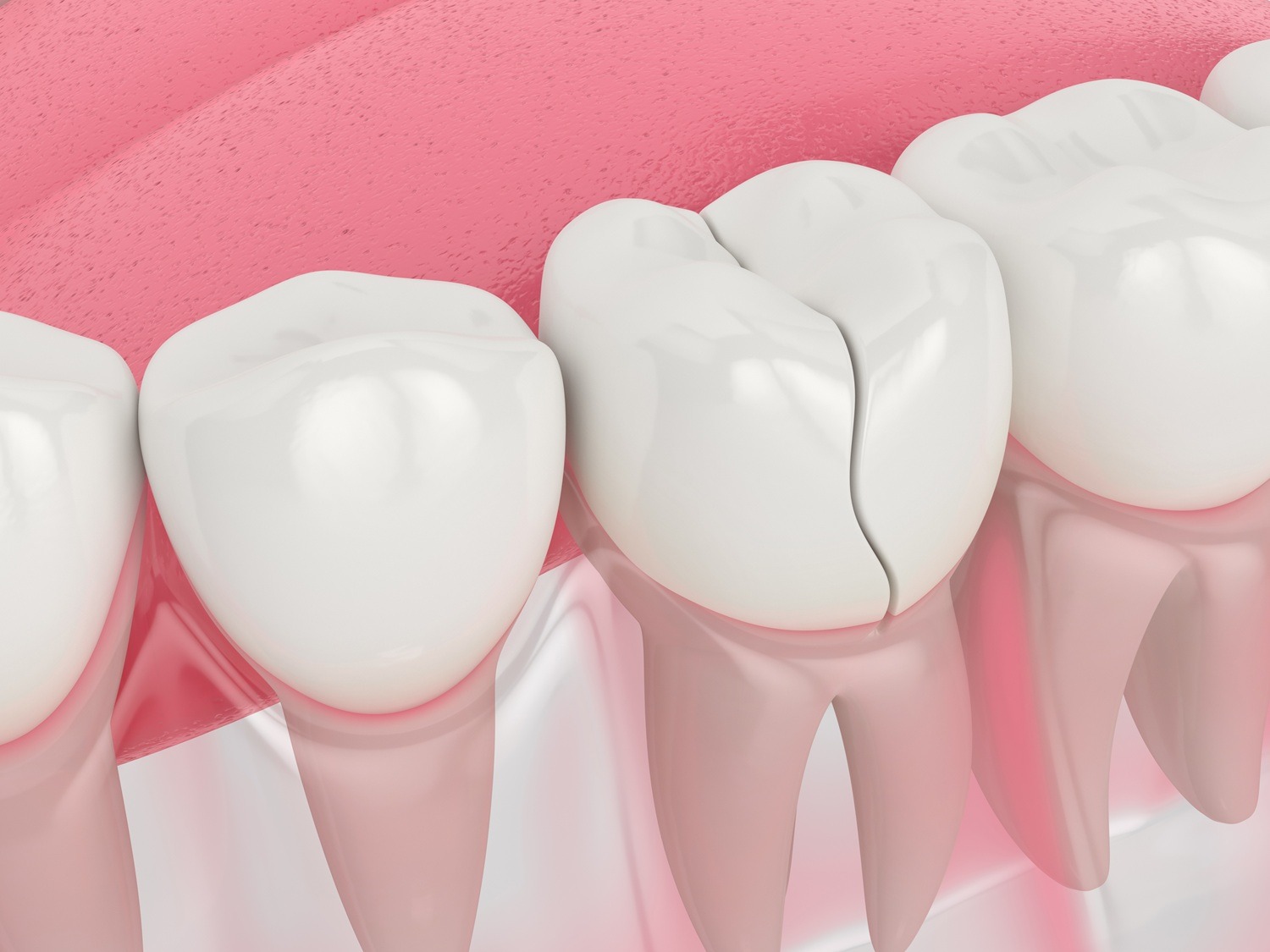
- Cracked teeth: Cracks that extend from the chewing surface toward the root without completely splitting the tooth. They may cause intermittent pain and can sometimes progress.
- Split teeth: Fractures that divide the tooth into separate pieces. Saving the entire tooth generally isn’t possible, although part may occasionally be preserved.
- Vertical root fractures: Cracks that begin in the root and move upward. They may cause few symptoms until infection develops in the surrounding gum or bone.
How Dentists Find a Crack That Doesn’t Show on an X-Ray
These cracks don’t always show up on a regular dental X-ray. Usually that’s because the fracture is too narrow or runs in a direction that’s hard to see, which shifts the heavy lifting to the patient’s description of what they feel. Your dentist might ask which foods cause pain, whether it hurts when applying or releasing pressure, and whether cold sensitivity disappears quickly or lingers afterward.
Other conditions, including cavities, damaged fillings, or gum problems, can produce similar toothache symptoms. Just because it hurts to bite down doesn’t mean you have any cracked teeth.
Dentists can confirm whether you have a cracked tooth or not by having you bite down on a small plastic apparatus, one cusp at a time. If releasing pressure on a particular part of the tooth produces the familiar sharp pain, that helps pinpoint the location. The dentist may also shine a bright light through the tooth, use magnification, or apply a special dye to make a fine crack more visible.
Sometimes fractures can be hidden by old fillings and are only revealed when that filling is removed. A narrow, unusually deep gum pocket beside one part of the tooth can also raise concern about a crack extending toward the root.
What Treatment Can Save a Cracked Tooth?
Depending on how much of the tooth is broken, cracked teeth can be treated with fillings, onlys, or crowns. For a crack that makes the tooth painful during chewing, a restoration covering the chewing surface may help protect the remaining structure. A dental crown covers the visible part of the tooth and can help distribute biting forces across it.
If the crack reaches the pulp, the soft tissue containing the tooth’s nerves and blood vessels, a root canal may be necessary. The tooth may then need a crown for protection. Some split teeth and vertical root fractures, especially those extending far below the gumline, require extraction, but particularly skilled specialists may be able to save part of the natural tooth.
The repair doesn’t always require multiple appointments, since some practices offer same-day ceramic crowns and onlays using equipment that designs and mills restorations in the office. Whether a single-visit repair is appropriate depends on the diagnosis. A tooth requiring root canal treatment or more extensive evaluation may need more visits. According to the American Association of Endodontists, a crown can provide substantial protection, but some cracks continue to progress despite repair.
What to Do Before Your Dental Appointment
If you suspect a cracked tooth, contact your dentist right away. Until the tooth is examined, chew on the opposite side when possible and choose softer foods. Avoid testing the painful tooth repeatedly to see whether the discomfort has disappeared.
What to Tell Your Dentist
- Which side of your mouth hurts, even if you can’t identify the exact tooth.
- Whether the pain occurs when you bite down, release pressure, or drink something cold.
- How long the discomfort lasts and whether the episodes are becoming more frequent.
- Whether you have a large filling in that area or know that you grind your teeth.
Mention any swelling or sensitivity that now lasts longer than it used to. Fever or facial swelling alongside dental pain warrants urgent assessment.
Questions Patients Ask About Cracked Teeth
Should I See a Dentist if the Pain Has Stopped?
Yes. Pain that disappears between meals doesn’t rule out a cracked tooth. Some cracks remain stable, while others progress and eventually damage the pulp. You don’t need to wait until the pain becomes constant.
What Should I Do if a Piece of My Tooth Breaks Off?
Rinse your mouth gently with warm water and contact a dentist right away. If you can find the broken piece, keep it moist and bring it to the appointment. The American Dental Association also recommends a cold compress against the face if swelling develops.
A broken cusp is different from a tooth that has been completely knocked out, although both require prompt dental attention. Don’t attempt to glue the fragment back onto the tooth yourself.
Can a Cracked Tooth Heal on Its Own?
No. Unlike a broken bone, a tooth cannot repair a fracture by growing new tissue across the crack. Treatment with a crown or another restoration may protect the tooth and reduce the chance of further damage, but it doesn’t make the original crack disappear.
Ask About Large Fillings at Your Next Cleaning
A tooth with a large old filling has less natural structure supporting its chewing surface. That’s one reason fractured cusps frequently develop around heavily restored molars.
Not every old filling needs replacement, but a dentist can look for weakened cusps, visible cracks, or changes around an existing restoration during a routine examination. If you have a back tooth with a large filling, ask whether there’s any evidence of cracking and whether the remaining tooth structure is well supported.
Sources
American Association of Endodontists: Cracked Teeth
Cleveland Clinic: Cracked Tooth (Fractured Tooth)