
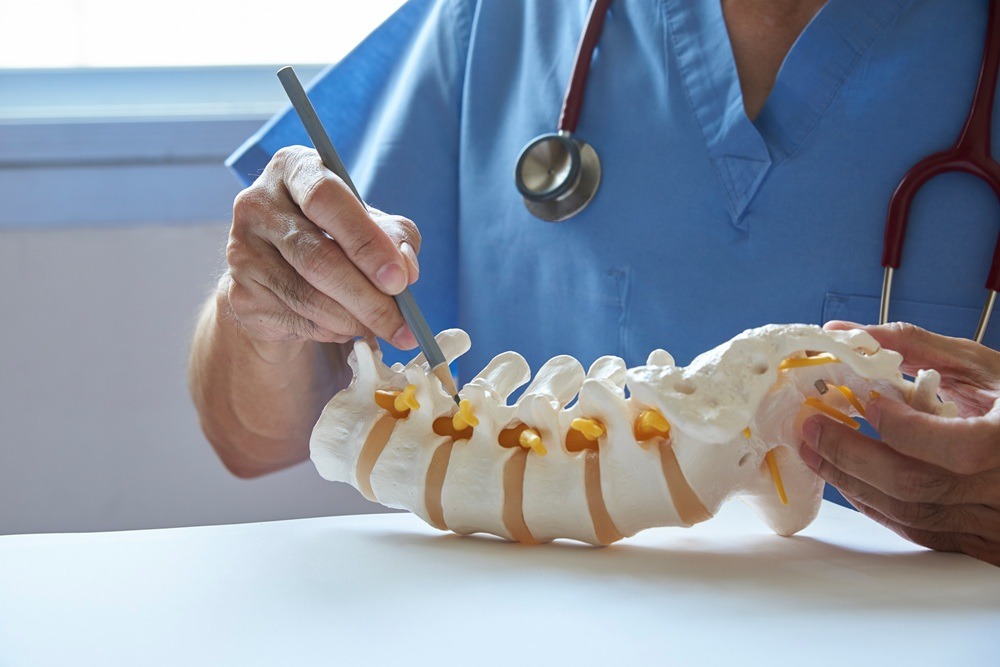
Just hearing the word “injection” can trigger that primal fight or flight response in some people. That’s totally understandable, especially when they relate to the spine, but the reality is that epidural injections sound significantly more invasive than they really are, and they’re a valid treatment option for back pain in Elizabeth, NJ.
Epidural injections deliver steroid medicine, sometimes with a numbing agent added, directly to the epidural space around the spinal nerves. The steroids or corticosteroids reduce inflammation, but can’t treat its underlying cause, so these injections are commonly used to provide temporary relief from nerve root irritation symptoms.
How the Injection Reaches an Irritated Nerve
When a disc bulges or a spinal canal narrows, they can encroach on that epidural space and press on nearby nerve roots, which causes pain and inflammation. Steroid medicine reduces that inflammation, and bringing it directly to the epidural spaces via needle can provide temporary relief.
These are incredibly small, difficult to reach targets, so doctors performing these injections use a variety of guidance techniques. Live X-ray, also called fluoroscopy, and contrast dye are common techniques used to confirm accurate delivery.
Epidural injections are technique-sensitive, and the specialists trained to perform them include physiatrists, anesthesiologists, radiologists, neurologists, and surgeons.
What Epidural Steroid Injections can Treat
Everyone hears about that burning or aching that starts in the low back and travels down one leg, which is a great example of what an epidural can treat. That kind of radiating pain is a very common symptom of a herniated disc pressing on a nerve root, for example. An epidural can relieve that inflammation and swelling for a time, relieving that pain.
Pain that doesn’t travel is a harder sell. The federal Agency for Healthcare Research and Quality reviewed 78 randomized trials of epidural injections and found limited evidence overall. In that review, epidural corticosteroid injections produced small immediate improvements for radiculopathy, but they were very temporary. The evidence didn’t show clear benefit for nonradicular back pain or spinal stenosis.
That finding sits a little awkwardly with how often injections are discussed. It’s reasonable to ask your doctor what symptom the injection is supposed to change and how you’ll both decide whether it worked.
The Injection Procedure
Before an epidural injection for back pain, your doctor will usually review recent MRI or CT images to choose the area of the spine to target. Bring an updated medication list too. If you take a blood thinner, don’t stop it on your own. The clinician who manages that medication should be involved in the decision.
Certain chronic conditions like diabetes and glaucoma can interact with epidurals. Steroid injections can raise blood sugar and keep it elevated for hours or days. They can also temporarily increase eye pressure, exacerbating a lot of glaucoma-based issues.
During the procedure, you’ll usually lie face down while the doctor numbs the targeted area and guides their needle where it needs to go. It doesn’t take long, but they may keep you for a short period afterward to monitor your condition. As always, if you’re receiving sedation of any kind, arrange for a ride home.
What Happens After an Epidural Steroid Injection
The steroid can take up to a week to start working, and the original pain may worsen during this time. Avoid jumping to conclusions that the epidural made it worse or isn’t working at all during this time.
Once you’re home after an epidural injection for back pain, contact your provider or seek urgent medical care for:
- A severe headache that gets worse when you sit or stand and improves when you lie down
- Fever
- New loss of bladder or bowel control
- New numbness or weakness in the legs
A severe positional headache can result from a spinal-fluid leak, a complication that affects fewer than 1% of patients. New bladder or bowel problems are also among the sciatica red flags that need urgent evaluation even when no injection was performed.
How Long Can Relief Last?
Cleveland Clinic reports that about half of people receiving an epidural steroid injection experience some pain relief. When it works, relief from an epidural injection for back pain may last from weeks to months and, rarely, close to a year.
Duration also depends on the underlying cause. A herniated disc may shrink over time on its own, so temporary relief can sometimes provide enough breathing room for the irritated nerve to settle while the disc returns to its original position.
But the real beauty of epidural steroid injections is how they allow patients to return to the things they enjoy. If debilitating back pain kept you from walking around town and identifying flowers, or swimming laps in your pool, injections can return those things to your life. They can also open a window to return to physical therapy, strengthening, or other back pain treatments.
Why Doctors Limit the Number of Shots
These injections involve steroids, which while miraculous medications, do come with some diminishing returns and side effects. Repeated injections, especially at high doses, can weaken the surrounding spinal bones or muscles. Most providers limit patients to two or three epidural steroid injections per year for this reason.
Before repeating an epidural injection for back pain, your doctor can look at how much the leg pain changed, how long the relief lasted, and whether the easier period allowed you to walk, sleep, or participate in therapy more comfortably.
Questions That Come Up Before the Shot
Does an epidural injection for back pain hurt?
Usually only a little. Much of the initial discomfort comes from the pinch of the numbing medicine.
During the procedure, you might feel pressure or tingling as the needle is positioned. Tell the doctor immediately if you feel sharp or intense pain rather than ordinary pressure or brief discomfort.
Is it the same as a labor epidural?
No. A labor epidural primarily uses anesthetic medication to reduce sensation during childbirth. An epidural injection for back pain uses a steroid to treat inflammation associated with certain types of spinal nerve pain.
You may see the abbreviation “ESI” on the scheduling paperwork or after-visit notes. It stands for epidural steroid injection.
What if the first injection doesn’t help?
A shot that changes nothing can still give your doctor diagnostic information. Cleveland Clinic notes that these injections can sometimes help identify the painful nerve, especially when more than one problem could be causing your symptoms.
At the follow-up, be ready to describe two periods separately: the first few hours after the shot, if numbing medicine was included, and the days after the steroid had time to start working.
If neither period brought meaningful relief, the pain may be coming from somewhere else. Pain arising from the facet joints, for example, may be evaluated with medial branch blocks and, in selected cases, treated by targeting the supplying nerves with radiofrequency ablation.
What to Bring to the First Consult
If you’re considering an epidural injection for back pain, bring your imaging report and an up-to-date medication list, including supplements and any blood thinner. It also helps to jot down where the pain travels and what changed, if anything, during physical therapy.
Ask what result would count as a successful injection in your case. You can also ask how frequently the doctor performs the procedure and what the next step would be if the first one doesn’t change your symptoms.
Keep the medication list and imaging records together for the appointment. It’s a small thing, but it can save time at check-in and keep a detail like a recent dose change from getting lost while you’re trying to remember everything else.
Sources
Chou R, Hashimoto R, Friedly J, Fu R, Dana T, Sullivan S, Bougatsos C, Jarvik J. Pain Management Injection Therapies for Low Back Pain [Internet]. Rockville (MD): Agency for Healthcare Research and Quality (US); 2015. PMID: 25879124.