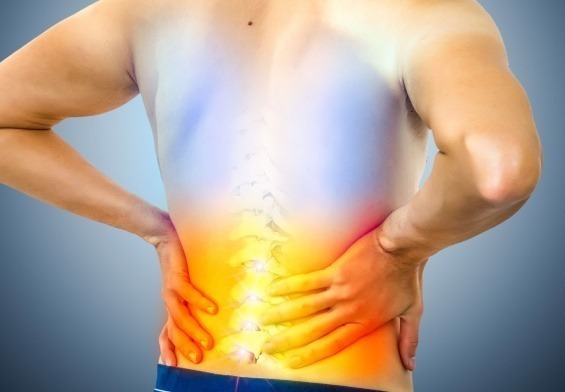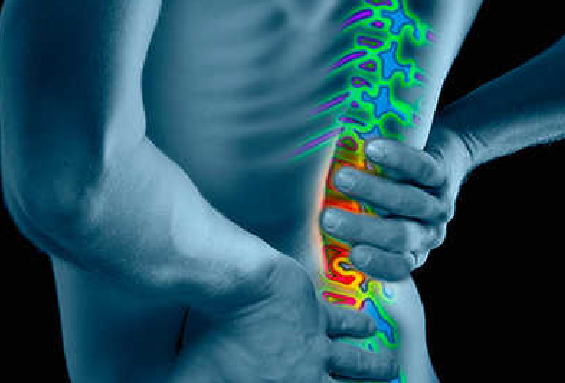
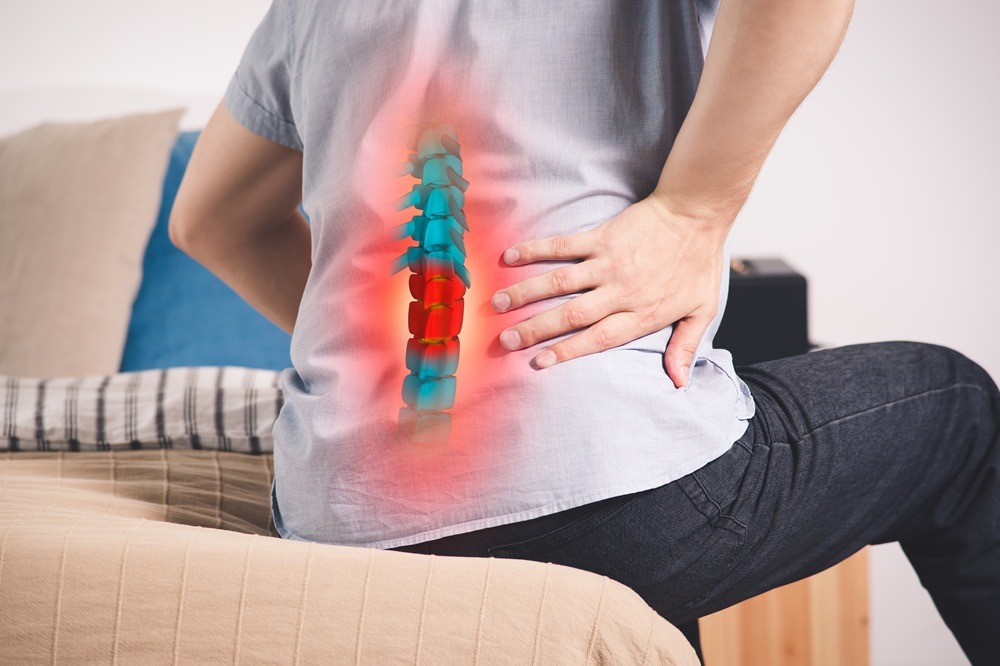
Foraminal stenosis happens when the small tunnel a spinal nerve travels through starts to narrow. That narrowing puts pressure on the nerve as it exits the spine. It shows up most in the lower back and neck. It can cause pain that runs down an arm or leg rather than staying in one place.
The term usually surfaces first on an MRI report, without much context for what it means. A pinched nerve and general spinal stenosis get confused with it constantly, even though each one points to a different problem in a different part of the spine.
What Foraminal Stenosis Is
Every spinal nerve leaves the spine through a small opening called a foramen. There is one on each side of the spine at every level. A nerve root passes through each one on its way out to the rest of the body. Foraminal stenosis is narrowing of that particular opening.
The opening can narrow for several reasons. A bulging disc is one. A bone spur is another. Thickened ligament tissue nearby can also crowd the space.
Bone and soft tissue naturally change with age, and that space can shrink gradually over years. In some cases, the narrowing barely brushes the nerve. In others, it presses hard enough to cause real, daily symptoms.
Foraminal Stenosis Symptoms and How They Differ from Central Stenosis
Central spinal stenosis narrows the main canal that contains the spinal cord itself. Foraminal stenosis narrows a side opening that a single nerve root passes through. Because only one nerve is usually affected, foraminal stenosis usually produces sharp, focused symptoms. Central stenosis usually causes a broader kind of leg heaviness instead.
Common symptoms include pain that follows a clear path down one arm or leg, along with numbness, tingling, or a burning feeling in that same path. Weakness in one muscle group can also occur if the nerve stays compressed for a long time. Symptoms can change with position. Certain postures open the foramen slightly, and others close it further, which is why some positions bring relief and others make things worse.
Foraminal Stenosis vs. a Pinched Nerve
The two terms get used interchangeably, but they describe different things. Stenosis is the narrowing itself, and a pinched nerve is what happens when that narrowing presses on a particular nerve. Someone can have foraminal narrowing on imaging without ever developing symptoms. Sorting out which one is happening, and where, is the kind of question the best neurosurgeon in San Diego should be able to answer clearly, not from imaging alone.
A surgeon treats the narrowing itself, not the general area. Pinpointing which foramen is narrowed, and which nerve runs through it, guides the entire plan. Imaging alone does not answer that question. A physical exam that connects symptoms to one nerve does.
What Causes the Narrowing
Foraminal stenosis develops from a handful of common changes in the spine. A bulging or herniated disc can push into the foraminal space from the front. Bone spurs, which form as joints wear down over time, can grow into the opening from the back. Thickened ligaments, another common age-related change, can close off the space from the sides.
These changes usually combine rather than acting alone: disc height loss, bone spurs, and facet joint overgrowth are the most common findings behind foraminal narrowing. Many cases involve more than one of these at once. Anyone searching for sciatica treatment San Diego options may be dealing with this same combination, since foraminal narrowing is one of the more common structural causes behind sciatic nerve pain. A thinner disc alone can be enough in some cases, since it lets the vertebrae above and below sit closer together, which shrinks the foramen as a direct result.
Age plays a large role in all of this. Discs lose height gradually over decades. Joints thicken as the body responds to years of ordinary wear. Someone in their twenties rarely develops foraminal stenosis on its own, while someone in their sixties or seventies commonly shows some degree of it on imaging, whether or not it causes symptoms.
An MRI is the usual way to confirm foraminal narrowing and see where it sits. A CT scan can also show the bone changes clearly, which helps when a disc is not the main issue. Neither scan alone tells the full story. The scan has to line up with the symptoms a person reports, or the findings stay hard to interpret.
Non-Surgical Treatment Comes First
Surgery is rarely the first step for foraminal stenosis. Physical therapy aimed at posture and core strength usually reduces pressure on the affected nerve. Anti-inflammatory medication can calm the irritation around a compressed nerve root while other treatment takes effect.
Targeted steroid injections at the affected level are another common early option. They will not fix the underlying narrowing. But they can reduce inflammation enough to break a cycle of pain and muscle guarding. These steps are enough for many cases, and surgery never becomes necessary.
When Foraminal Stenosis Needs a Surgeon
A few signals point toward a surgical evaluation. Pain, numbness, or weakness that does not improve after several weeks of physical therapy and medication is one. Weakness that keeps getting worse, rather than staying steady, is another. That kind of weakness should not wait for a routine follow-up.
Symptoms affecting bladder or bowel function are a separate, more urgent category. They call for immediate medical attention rather than a scheduled visit. Short of that emergency scenario, a surgeon typically wants to see that non-surgical treatment has had a fair trial first. Weeks of real effort, not days, usually make up that trial.
What Laminectomy and Foraminotomy Do
When surgery is needed, the goal is plain. It is to create more room around the compressed nerve. That kind of decompression work is what an experienced spine surgeon in San Diego performs on a regular basis. A foraminotomy targets the foramen itself. It widens that single opening rather than the wider canal a laminectomy addresses. Which approach fits depends on where the narrowing sits and how many levels are involved. Both aim for the same outcome: enough room for the nerve to move without being pinched.
Questions to Ask Before Surgery
Does foraminal stenosis always need surgery?
No. Many cases respond to physical therapy, medication, and time. Surgery becomes the right option mainly when non-surgical care fails or when weakness keeps getting worse.
Can foraminal stenosis heal on its own?
The narrowing itself does not reverse. It comes from bone and tissue changes that do not shrink back down. Symptoms can still improve quite a bit as inflammation settles and posture or strength improves around the area.
Is foraminal stenosis the same on both sides of the spine?
Not always. Foramina exist on both sides at every level. Narrowing can affect one side more than the other, or only a single level rather than several.
Living With Foraminal Stenosis Long Term
Foraminal stenosis is usually managed without ever needing surgery. Paying attention to posture helps, and so does staying active within a comfortable range. Following through on physical therapy reduces the chance that symptoms progress to the point of needing a surgical opinion.
For anyone dealing with new or unclear symptoms, it helps to start with a broader look on how spinal stenosis develops before narrowing down to the foraminal type. Foraminal stenosis is a mechanical problem with a clear cause. Once that cause is identified, the next step is usually physical therapy, medication, or in some cases a surgical evaluation.
Sources
Cleveland Clinic. Foraminal Stenosis.
WebMD. Foraminal Stenosis: What Causes It and How It’s Treated.