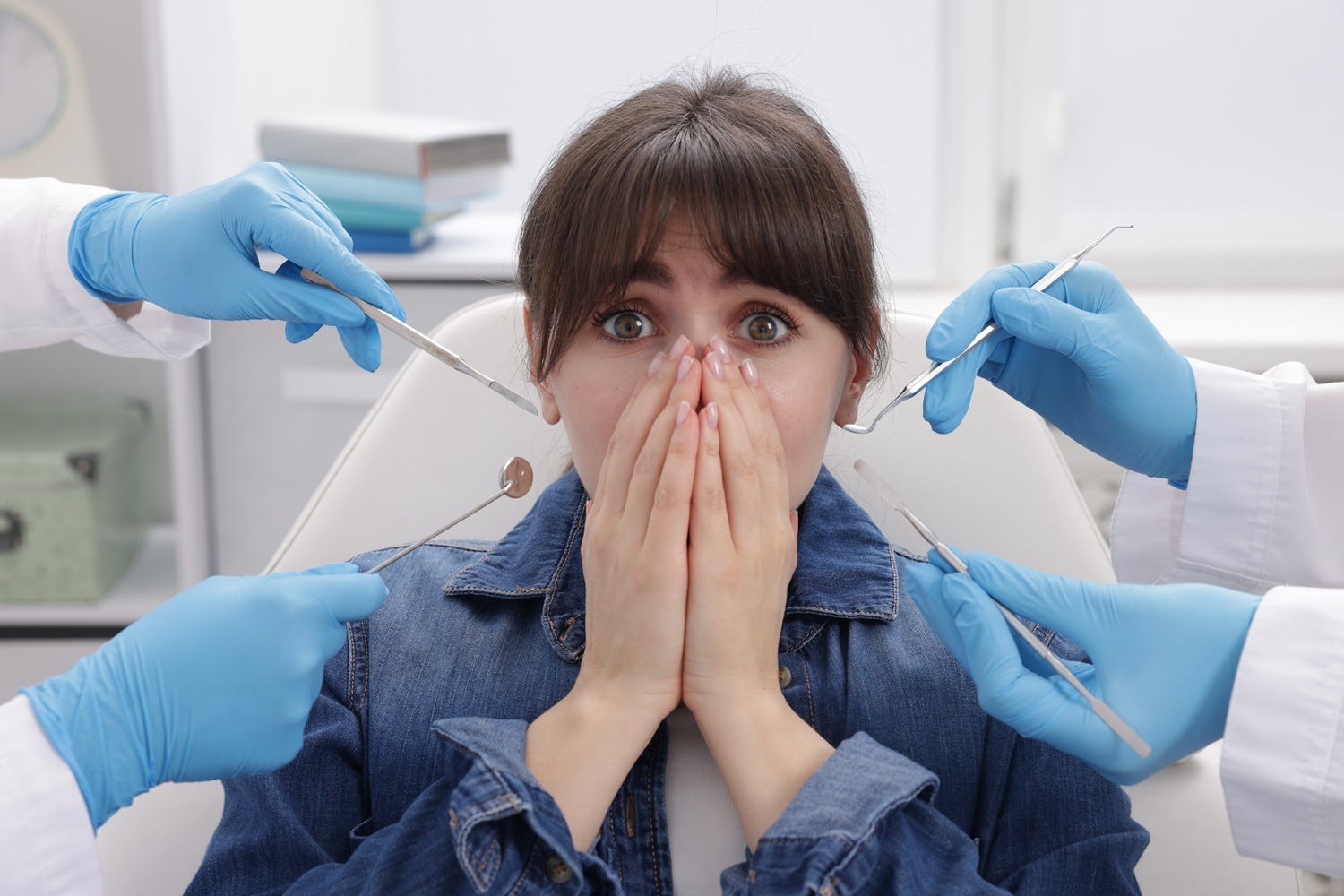
Everyone knows someone with a fear of the dentist, even if that person is themselves. It’s such a ubiquitous thing that permeates both pop culture and our daily lives. Most people assume there was some frightening appointment or other form of trauma during childhood that stuck around into adulthood. That may be the case for some people, but not for others.
A study published in Frontiers in Oral Health followed adults receiving treatment for dental anxiety and asked when their fear began. Some traced it to childhood, others connected it to a difficult dental experience as an adult, and another group described the anxiety as having always been present.
What Fear of the Dentist Looks Like in Adults
Fear of the dentist can manifest in numerous ways. Someone might cancel an appointment the morning of, rebook it, and then cancel again when the new date arrives. Someone else might deliberately choose a dentist with an office that’s far away, so they have more time to reconsider going at all during the drive.
Sometimes, fear of the dentist can manifest in physical ways. Hearts can race in anticipation, exams can be drenched in sweat, and hands can white-knuckle the armrests. Tension and trauma can also remain after the appointment ends. Stress-related jaw clenching can feel similar to a TMJ flare-up hours or days later.
Other adults experience dental anxiety mostly through avoidance. Years pass between appointments while each delay still feels temporary.
When Dental Nerves Start Interfering With Care
It’s normal to be nervous before a dental appointment to some extent. But when that anxiety interferes with the appointment itself, it becomes a problem worth addressing. Cleveland Clinic describes dentophobia as fear that is out of proportion to the situation and can become severe enough that someone avoids dental care even when they are experiencing pain.
A person can walk into an appointment feeling nervous and still receive the care they need. Repeated cancellations, years between visits, or avoiding treatment despite symptoms show that anxiety is starting to affect healthcare decisions.
Dental Anxiety Can Begin in Adulthood
The Frontiers in Oral Health study found many roads that lead to dental anxiety. Some participants connected the fear to childhood experiences. Others identified distressing dental experiences that happened later in life. Another group described their dental anxiety as having always been present.
Cleveland Clinic also identifies previous negative dental experiences as a possible cause of dentophobia. Hearing about another person’s frightening experience can contribute as well. It’s frightening when someone watches their favorite innocuous sitcom, and the opening scene details how the dentist punctured the character’s tongue and spent the rest of the appointment sewing it back together. Especially when it’s played for laughs.
When One Adult Appointment Changes the Next One
A difficult appointment can change how someone approaches dental care afterward. For some people, the memory centers on that feeling of loss of control during the visit. Others may remember pain, discomfort, or simply feeling unable to relax once treatment started.
The Frontiers study describes distressing dental experiences and difficulties with control among the themes connected with dental anxiety. Once an appointment is remembered that way, the next visit can feel different before anything has even happened. The chair, the instruments, the sounds in the office, or the thought of another procedure can serve as reminders of the previous traumatic experience.
Is This Dental Anxiety, or Part of a Broader Anxiety Pattern?
Fear of the dentist can exist on its own. Broader anxiety can create a similar pattern of avoidance and physical symptoms.
Someone who dreads dental visits in particular may be reacting to a fairly specific situation. But if they also dread things like work, driving, medical appointments, or other aspects of daily life, there’s likely something bigger at play, and it might be worth learning about anxiety more broadly. It is also reasonable to raise the larger pattern with a doctor or therapist separately from whatever you arrange with a dentist.
What Sedation Dentistry Changes
Fear of the dentist is common enough that dentists have developed methods to combat it. Options like sedation dentistry give some anxious patients another way to get through treatment. The level of support depends on the patient’s needs and the dental work being performed.
Sedation is only one part of the equation, though. It might have the opposite effect on someone whose anxiety stems from feeling powerless during a previous appointment. That person might benefit from increased communication and control instead.
Knowing what will happen before a procedure starts can reduce some of the uncertainty. So can having an agreed-upon way to pause treatment.
Questions to Ask Before Your First Visit Back
You can learn a lot about how a practice handles dental anxiety before any treatment begins.
- What options are available if my anxiety becomes difficult to manage?
- Can we agree on a signal that means I need you to pause?
- How much will you explain before starting each part of the appointment?
- Can my first visit focus on a conversation and exam before we plan treatment?
- What happens if I need a break partway through?
Those questions give the dentist information about what makes the appointment difficult for you so they can prepare accordingly.
Learning some concrete strategies for overcoming dental anxiety beforehand can also make the visit feel less unpredictable. It can also help to decide how to stay calm during the visit itself while you are still at home, instead of scrambling to figure it out when the time comes.
What Avoidance Costs Over Time
Canceling an appointment can lower anxiety almost immediately. But the dental issue that prompted the appointment in the first place doesn’t just vanish.
Avoiding care can allow problems to go untreated longer. Cleveland Clinic notes that severe dentophobia can contribute to poor oral health when fear repeatedly keeps someone away from dental care that they legitimately need.
Home care still plays an important role. Brushing, flossing, and following good dental hygiene habits help protect your teeth between appointments. They cannot tell you what is happening below the surface or replace an examination when something hurts, changes, or needs professional attention.
How to Choose a Dentist When You’re Anxious
A phone call can tell you almost as much about a practice as its website. Tell the office that you’re anxious and pay attention to how they react. Does the person rush straight into scheduling, or ask what would make the visit easier?
Ask whether the dentist explains procedures before starting. Find out whether patients can pause during treatment and whether anxiety-management options are discussed openly.
Coming back through a general dentistry practice that is comfortable working with nervous patients may make the first step less intimidating. How someone responds to a nervous question on the phone is useful information. It gives you an early idea of how questions may be handled once you’re sitting in the chair.
Questions Patients Ask Before Coming Back
I developed dental anxiety as an adult. What should I tell a new dentist?
Tell them when the fear started and what you remember changing around that time. If one appointment stands out, explain what made it difficult. Maybe you felt rushed, uncomfortable, unable to pause, or unsure about what was happening.
The purpose is to help the new dentist understand which parts of the experience deserve extra attention this time. You do not need a childhood history of dental anxiety to validate that conversation.
How do I know if sedation dentistry is right for me?
That depends on how severe the fear is and what procedure needs to be done. Ask the dentist what anxiety-management and sedation options are available, what each option involves, and which approach they would consider appropriate for your situation. A consultation gives you a chance to have that conversation before the actual procedure is underway.
What if I haven’t been to a dentist in years because I’m afraid?
Say that when you make the appointment. Practices that work with anxious patients are used to seeing people who have delayed care. You can ask whether the first appointment can focus on a conversation and examination before treatment begins. Starting with a smaller step may feel more manageable than imagining that years of dental care have to be dealt with in one visit.
Before You Cancel Another Appointment
Dental anxiety can start in childhood, after an experience later in life, or without one clear moment you can point to. The starting point does not determine whether the fear deserves attention.
Your next visit also does not have to fix years of anxiety at once. A reasonable first goal is finding a dental team that knows you’re anxious before the appointment begins and has a plan for helping you get through it.
Sources
Dentophobia (Fear of Dentists): Causes, Symptoms and Treatments, Cleveland Clinic
Konneker E, Singh D, Tellez M, Ismail AI and Dunne EM (2025) A mixed methods exploration of the origin of dental anxiety and coping strategies among participants in a behavioral intervention for dental anxiety. Front. Oral Health 6:1589764. doi: 10.3389/froh.2025.1589764