
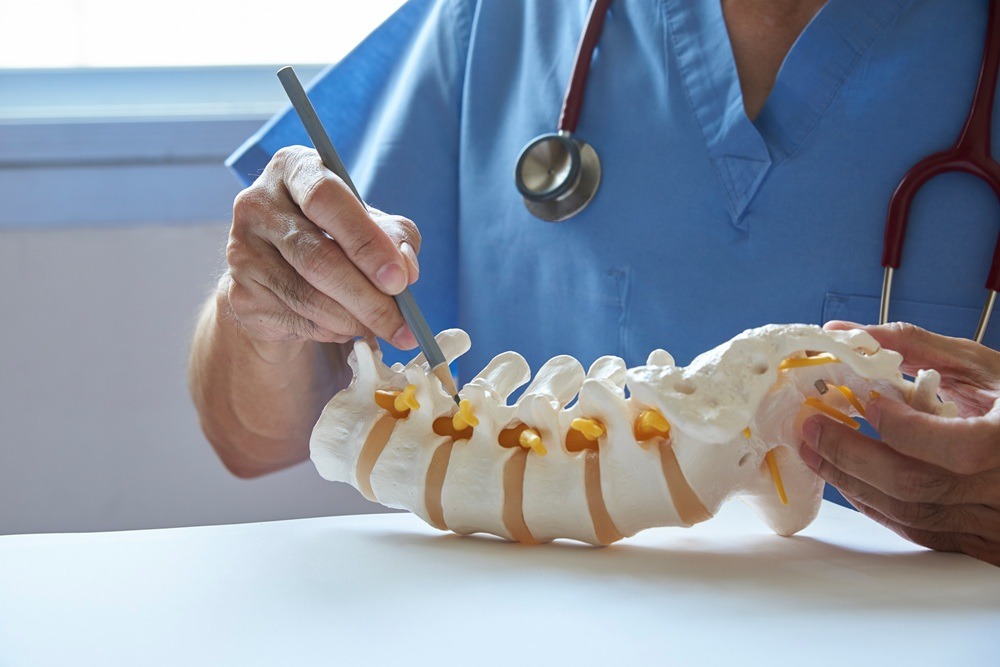
A surgeon just recommended back surgery and your world grinds to a halt. A simple yet difficult question swallows everything around you in that moment. Is back surgery worth it, given your specific circumstances?
The answer to this question depends on your particular diagnosis, what’s already been tried, the surgery’s expected effects, and the potential consequences of waiting.
Some cases are urgent enough that delaying treatment creates its own risk. Others leave room for two experienced surgeons to look at the same information and give two different, yet equally reasonable, recommendations.
Is Back Surgery Worth It After Nonsurgical Treatment Has Failed?
Mayo Clinic says back surgery can help with some causes of pain but is rarely 100% necessary for back pain. Most back pain improves on its own within three months. But if you’re in debilitating pain and other treatments haven’t worked, back surgery is an option to keep on the table.
Another set of eyes can be useful after you’ve been through a meaningful course of nonsurgical care. A second opinion usually means bringing the same MRI, medical history, and treatment record to another experienced group of spine surgeons.
When the two surgeons agree, the decision becomes a no-brainer. But when they disagree, you have more work to do before making any meaningful medical decisions.
What Counts as a Meaningful Trial of Nonsurgical Care?
There isn’t one treatment timeline that proves nonsurgical care has failed for every back problem.
Mayo Clinic lists options such as physical therapy, medicines, heat, and ice among common treatments for back pain. Which treatments make sense before surgery depends on the diagnosis, symptoms, severity, and whether there is progressive neurologic loss.
For a second-opinion visit, bring a clear record of what you’ve tried. Include how long you stayed with physical therapy, what medications or other treatments were used, whether anything improved, and why a treatment was stopped.
That history gives the next surgeon more to work with than simply saying, “Physical therapy didn’t help.”
The Symptoms That Should Not Wait for a Routine Second Opinion
Not all symptoms are created equal. Some can wait to be treated, while others should be treated like a medical emergency. Cauda equina syndrome, for example, can cause bladder or bowel dysfunction, numbness or abnormal sensation around the buttocks and inner thighs, and leg weakness. Cleveland Clinic describes it as a medical emergency because prolonged nerve compression can cause permanent damage. Even acute cases require emergency surgery, often within 24 to 48 hours after symptoms begin.
When to Go Straight to the Emergency Room
If you develop symptoms consistent with cauda equina syndrome, especially new bladder or bowel problems, saddle-area numbness, or rapidly worsening weakness, seek emergency medical care right away. Cleveland Clinic specifically advises going to the emergency room immediately when these symptoms occur.
Everything else in this article assumes you are dealing with a non-emergency surgical decision.
Why Two Surgeons Can Read the Same MRI Differently
An MRI is important, but it does not make the decision by itself.
Mayo Clinic notes that imaging sometimes shows bulging or herniated disks that cause no symptoms and thus need no treatment. It also notes that surgery tends to relieve leg pain caused by pinched spinal nerves more effectively than isolated back pain.
When a surgeon reads your MRI, they’re mentally mapping what they see in the image to your symptoms, physical examination, treatment history, and the outcome you’re trying to achieve.
There’s a lot of leeway here due to differences in training and clinical experience between surgeons. One surgeon might look at your scans and conclude you need back surgery, while another might think the connection is not strong enough yet. The real value of getting a second opinion lies in making sure you understand the recommendation before committing to an irreversible decision.
What Happens During a Second-Opinion Consultation?
Expect the new surgeon to review the imaging and medical records in addition to the written MRI report. A new physical examination may also change how they interpret the imaging in the context of your symptoms.
Bring the actual scan files when possible, along with the radiology report, treatment notes, medication history, and any prior surgical records.
Before leaving, ask how the second surgeon’s conclusion will be documented so you can compare it carefully with the first recommendation.
If You’re Still Unsure After Two Opinions
Sometimes both surgeons recommend the same procedure. It’s okay to still be hesitant when that’s the case. You can make the most of that hesitation by turning it into concrete questions.
Questions to Ask Before You Decide
You don’t need to have everything figured out before a consultation. Before you leave, you should understand what the surgeon believes will improve, what may stay the same, and what risks come with trying to change it. Here are a few questions you can ask to get a better understanding:
- What happens to my pain and daily life if I wait another six months?
- What outcome does this surgery have the best chance of improving in my case?
- What complication or failure would concern you most with this procedure?
- How do the expected results for my diagnosis compare with the broader numbers I may see online?
- Is there a less invasive procedure that could address the same problem?
- What would make you recommend against surgery if you were reviewing this case again today?
A surgeon who is comfortable explaining those limits gives you useful information. So does one who can’t give a clear reason for why this operation fits your diagnosis.
Why Spinal Fusion “Success Rates” Need Context
Published spinal fusion numbers can look more precise than they really are.
A 2025 systematic review in the Journal of Neurosurgery: Spine examined 20 studies covering 1,324 spinal fusion procedures. The authors’ central problem was that there was no unified definition of successful spinal fusion that accounted for both imaging and a patient’s clinical symptoms. They proposed a more standardized way to evaluate success rather than offering one percentage that applies to every patient.
A fusion can look solid on imaging while the patient continues to have symptoms, and studies can define “success” differently depending on what they measure.
Reoperation rates tell you something different.
A 2022 nationwide cohort study followed 65,355 adults in South Korea who underwent instrumented spinal fusion for degenerative spinal disease. Within three years, 4.5% had undergone a reoperation. The three-year rate was 5.2% among lumbar fusion patients, compared with 2.7% for cervical and 3.2% for thoracic fusion.
All this is useful context, not a predictor of what will happen to you, specifically. Procedure type, spinal region, diagnosis, age, health conditions, and other factors can change an individual’s risk.
The Diagnosis Changes the Answer
Whether surgery makes sense depends heavily on what the surgeon is trying to fix.
Mayo Clinic notes that surgery tends to help leg pain from a compressed spinal nerve more reliably than back pain itself. Imaging may also reveal bulging or herniated disks in people who have no symptoms from those findings and need no treatment for them.
Ask your surgeon to show you exactly how what your MRI revealed connects to the pain, weakness, numbness, or functional limitation you are trying to improve.
If that connection is hard to explain, getting another interpretation becomes more valuable.
Practical Questions About Getting Another Opinion
Does Medicare cover a second surgical opinion?
In some cases, yes. Medicare Part B covers a second opinion for medically necessary, non-emergency surgery. Medicare also covers a third surgical opinion when the first two opinions differ. Costs depend on the Part B deductible, Medicare-approved amount, and other coverage factors.
For private insurance or Medicare Advantage coverage, check the plan’s own requirements, network rules, and authorization process before scheduling.
How quickly should I get another opinion?
There is no universal waiting period that applies to every non-emergency case.
Tell the second practice what surgery has been proposed, what symptoms you have, and whether anything is worsening. Ask how soon the surgeon can review your imaging and whether the consultation requires an in-person examination.
If symptoms change while you’re waiting, especially if new weakness, bladder or bowel dysfunction, or saddle-area numbness develops, the situation should be reassessed urgently rather than treated as a routine second-opinion timeline.
What should I plan for if both surgeons recommend surgery?
Once the decision is made, the questions shift toward recovery.
Different procedures come with different restrictions and discharge instructions. A spine surgery discharge checklist for going home can help you think through practical items such as mobility equipment, medications, transportation, and follow-up appointments before the day you leave the hospital.
Your surgical team should provide the instructions that apply to your specific procedure.
Before You Sign the Consent Form
Before you schedule surgery, decide what outcome would make the operation worthwhile to you.
Maybe it’s sleeping through the night. Maybe it’s walking farther without leg pain, returning to work, or getting back to a sport you miss.
Bring that goal into the consultation. Ask the surgeon whether the diagnosis, imaging, and proposed operation line up with it.
Also bring your scan files, not only the written report. The surgeon reviewing your case should have the chance to see the images firsthand.
When you’re comparing options, a spine center that treats second opinions as a normal part of surgical decision-making can give you another opportunity to test the recommendation before you commit.
Don’t shop around from surgeon to surgeon until you find one that tells you what you want to hear. That defeats the purpose, which is to understand why surgery is being recommended, what it is expected to change, and whether the evidence in your own case supports that decision.
Sources
Back Surgery: When Is It a Good Idea?, Mayo Clinic
Cauda Equina Syndrome, Cleveland Clinic
Kim J, Ryu H, Kim T-H. Early Reoperation Rates and Its Risk Factors after Instrumented Spinal Fusion Surgery for Degenerative Spinal Disease: A Nationwide Cohort Study of 65,355 Patients. Journal of Clinical Medicine. 2022; 11(12):3338. https://doi.org/10.3390/jcm11123338
Sanghvi PA, Wiener JM, Meade SM, Boden LM, Shost MD, Steinmetz MP. Development of a unified and comprehensive definition of successful spinal fusion: a systematic review. Journal of Neurosurgery: Spine. 2025;42(4):403-412. doi:10.3171/2024.9.SPINE2465