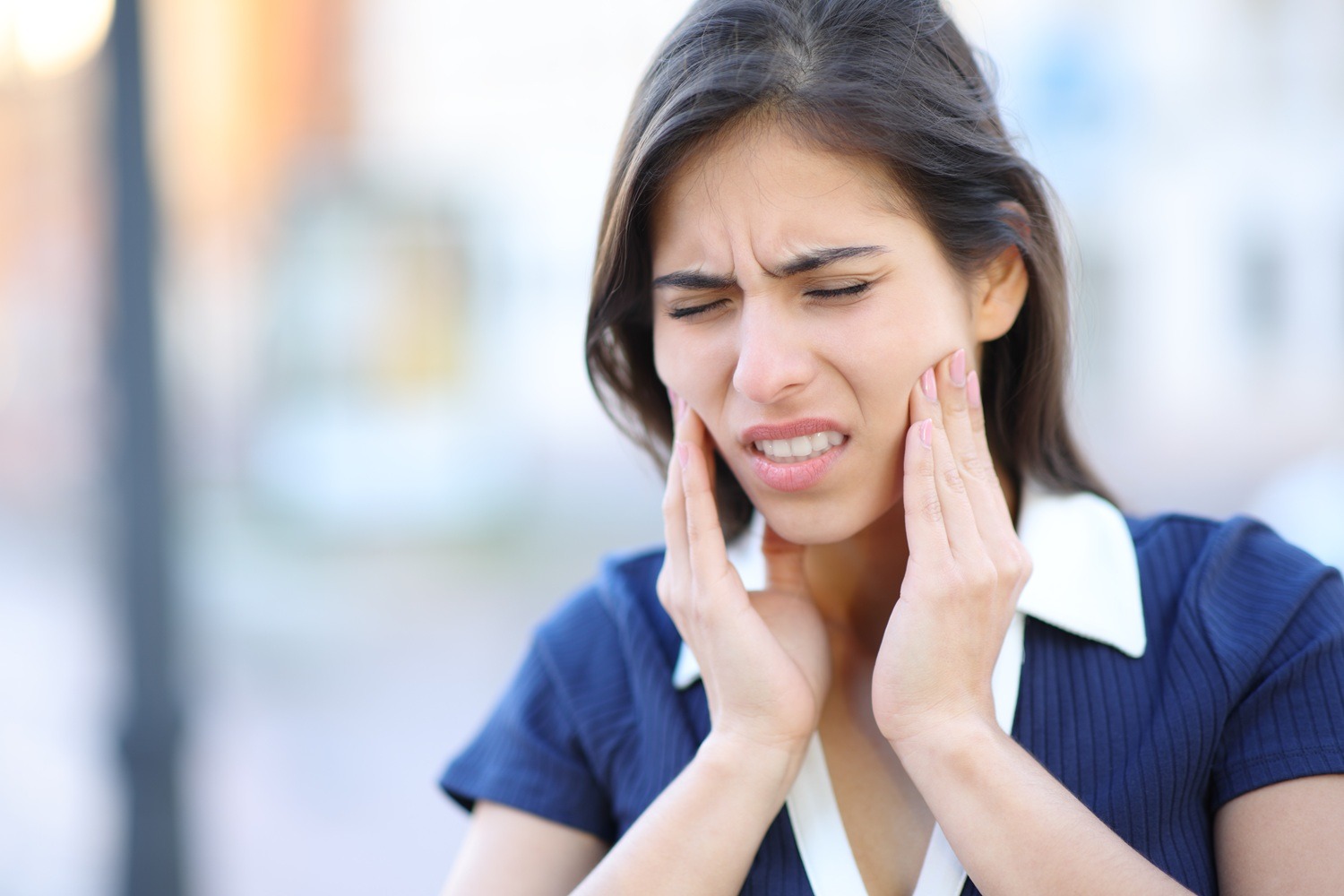
That all-too-familiar pain and clicking in your jaw can rear its ugly head at the most inopportune times, right when you’re going on a trip or just when everything at home feels like too much. A TMJ flare up is usually a physical response in the jaw, a messenger that you’ve been clenching your jaw or grinding your teeth for a while without realizing.
What Is a TMJ Flare Up?
TMJ stands for temporomandibular joint, which is the joint connecting your jawbone to your skull, located right in front of your ears. A TMJ flare up refers to sudden pain, stiffness, clicking, or movement limitations in that joint that weren’t there before.
Most people would see this as outside a dentist’s scope of practice, but many dentists like Dr. Gary Silverstrom and his team at the Silverstrom Group see patients currently experiencing flare ups or other forms of jaw pain. Their treatment toolbox contains numerous options like TMJ bite therapy and NTI night guards, which may be considered when symptoms recur often enough to need more than home care.
When Jaw Pain Is Not Coming From the TMJ
Most jaw pain is related to muscle tension, clenching, dental problems, or irritation around the joint. But there is a huge outlier you should be aware of due to its urgency and severity.
According to the CDC, pain or discomfort in the jaw, neck, or back can be possible warning signs of a heart attack. When a heart attack disrupts blood flow to these areas, they can become quite sore and painful. Women, in particular, may also experience symptoms such as jaw or back pain, shortness of breath, nausea, and unusual fatigue.
Jaw pain that appears with chest pressure, pain spreading into an arm, shortness of breath, nausea, a cold sweat, or lightheadedness should not wait for a dental appointment. Call 911.
Why Stress Makes Jaw Clenching Worse
Stress can increase the muscle activity around the jaw. If you’re having a bad day, it’s not uncommon for your jaw muscles to stay contracted even when you’re not using them by chewing or speaking.
It may not feel like much from moment to moment, but it’ll certainly feel like something after several hours or several days. Building up loads of tension over time can leave the muscles sore and the joint more sensitive during ordinary movement.
Awake Bruxism: Clenching That Happens During the Day
Awake bruxism refers to jaw clenching while awake, which happens a surprising amount. Unlike sleep bruxism, awake bruxism can fluctuate alongside your stress levels throughout the day. You might subconsciously tighten your jaw during a stressful phone call, or irritate the joint whenever you cough or sneeze. When the pressure passes, so does the tension, but it can leave lingering soreness behind.
What a Stressful Week Does to Your Jaw
A 2025 longitudinal study published in Dental and Medical Problems tracked the same people over time and found that their awake bruxism behaviors increased as their perceived stress rose.
This study, specifically, tracked variables within individual participants instead of comparing one group of experimental subjects vs. a control group of subjects. This gave the researchers more detailed insight into the relationship between clenching behavior and stress levels in each individual.
This helps explain why someone may go several weeks with manageable jaw symptoms and then develop a noticeable flare during one especially demanding stretch.
The Stress-Pain Loop
After a few days of clenching, chewing, yawning, and talking may begin to hurt. That discomfort can feed into the stress, especially if it interferes with meals, sleep, or concentration, forming a vicious cycle.
The original stressor may already be fading while the jaw remains irritated. Pain leads to more guarding and muscle tension, which can keep the flare going long after the original catalyst fizzles out.
Clues That Stress Is Contributing to the Flare
Stress-related clenching often creates recognizable patterns. The jaw may feel especially sore in the morning after nighttime or early-morning clenching. Tightness may ease somewhat as the person begins moving and talking during the day. The symptoms may also appear during the classic highly emotional situations.
These patterns can suggest that stress and bruxism are contributing, but they can’t rule out an actual joint problem, dental issue, injury, or bite-related concern. Pain that becomes constant, worsens steadily, or significantly limits movement warrants a dentist appointment.
How to Calm a TMJ Flare Up
Short-term relief usually begins by reducing the load on the jaw. The National Institute of Dental and Craniofacial Research recommends conservative measures such as:
- choosing softer foods temporarily
- applying heat or cold to sore jaw muscles
- using gentle jaw stretches
- avoiding gum chewing and nail biting
- paying attention to daytime clenching
You want to buy your irritated muscles time to calm down. If you’re always chewing tough foods, resting your chin in one hand, or pressing your teeth together while concentrating, it may be time to reevaluate those habits.
NIDCR also notes that genetics, psychological and life stressors, and differences in how people perceive pain may all influence whether a temporomandibular disorder develops or becomes persistent. The condition is usually the result of several combined causes.
For patients with pronounced muscle tension or heavy clenching, Botox may be a way to reduce activity in the involved jaw muscles. Whether it’s appropriate depends on the patient’s symptoms, examination, and treatment history.
Longer-Term Options When Flare Ups Keep Returning
If you’re repeatedly experiencing a TMJ flare up, there are options to keep them at bay. For example, a properly fitted night guard can help manage the effects of clenching and protect the teeth from constant pressure.
Because jaw symptoms and nighttime breathing concerns can overlap in some patients, an evaluation may also consider snoring, disrupted sleep, morning headaches, or other possible airway symptoms. Treating the jaw without looking at the broader nighttime pattern may leave part of the problem unaddressed.
Stress also affects more than the jaw. Daily stress management habits may lower muscle tension and make clenching easier to notice. Small pauses during the workday, relaxed jaw positioning, physical activity, and a more consistent sleep routine may all form part of a longer-term plan.
When to See a Dentist About Recurring Flare Ups
A mild flare that begins during a stressful week and settles as the tension eases may be manageable with temporary home care. An evaluation becomes more important when flare ups:
- keep returning
- become more painful
- continue despite conservative care
- cause ear-area pain
- make it difficult to open the mouth fully
- interfere with eating or sleeping
Frequently Asked Questions
Can stress alone cause a TMJ disorder?
Stress is usually a contributor, but not the entire explanation. Temporomandibular disorders like TMJ flare ups can involve muscle overuse, joint changes, injury, pain sensitivity, and other individual factors. Stress can intensify the problem by increasing clenching and keeping the muscles tense for longer periods.
How long does a stress-related TMJ flare up last?
There is no single fixed timeline. A mild flare often begins improving within several days and continues to settle as clenching decreases, but how quickly it resolves depends largely on how quickly the underlying stress eases. Symptoms that continue well beyond the stressful event, keep returning, or become progressively worse should be evaluated.
Can someone clench their jaw without realizing it?
Yes. Awake bruxism often involves sustained, low-level muscle tension rather than loud or obvious grinding. Someone may not notice the habit until the jaw starts to ache or they catch themselves holding their teeth together during a stressful task.
What Breaks the Cycle
A TMJ flare up during a stressful week is a genuine response to something that’s genuinely stressing you out. The most effective plan usually attacks from both angles: calming the irritated jaw and reducing the clenching that keeps loading it.
Sources
About Heart Attack Symptoms, Risk, and Recovery — Centers for Disease Control and Prevention
Emodi-Perlman A, Zur M, Czygrinow AY, Ventura N, Eli I. Impact of long-term stress on awake bruxism: An observational longitudinal within-subject study of stress-related changes. Dent Med Probl. 2025;62(6):1059–1067. doi:10.17219/dmp/209181
TMD (Temporomandibular Disorders) — National Institute of Dental and Craniofacial Research