Many people never hear the words skull base tumor until an MRI finds one. The location makes these tumors different from other brain tumors. They sit deep in the skull, close to nerves that control vision, hearing, and balance. That location is why symptoms can be easy to miss at first.
What Is a Skull Base Tumor?
A skull base tumor grows in one of the most crowded areas of the body, where nerves controlling sight, hearing, swallowing, and balance all pass through a space smaller than a golf ball. This area contains many nerves and blood vessels packed close together. A tumor here can be benign or malignant. Even a benign tumor can cause vision loss or facial numbness just by pressing on a nearby nerve.
Meningiomas, Pituitary Tumors, and Other Common Types
Meningiomas are the most common skull base tumor. They grow from the tissue covering the brain and spinal cord. Pituitary tumors form in the pituitary gland, which sits at the skull base and controls hormones. Acoustic neuromas and chordomas are less common types that also start in this region.
Early Signs and Symptoms
Headaches are usually the first symptom people notice. Vision changes can follow if the tumor presses on the optic nerve. Some people notice a change in smell or taste. Facial numbness or weakness can also develop slowly.
Vision, Hearing, and Balance Changes
Tumors near the hearing nerve can cause ringing in the ears or hearing loss on one side. Balance problems can follow as the tumor grows. Double vision can happen if a tumor presses on the nerves that move the eyes. These changes usually develop over months, not overnight.
What Causes a Skull Base Tumor to Form
Doctors do not fully know why skull base tumors form. Genetics can play a role in some cases. A rare inherited condition called neurofibromatosis type 2 raises the risk for certain tumors. Most cases, though, develop without any family history at all.
How Doctors Diagnose the Condition
An MRI is the main way doctors find a skull base tumor, and both the Mayo Clinic and Johns Hopkins point to this scan as the standard first step. A CT scan can add detail about nearby bone. Hearing and vision tests can show whether a tumor has already affected those nerves. A biopsy sometimes confirms the tumor type before treatment starts.
Watching, Radiation, or Surgery: How Doctors Decide
Doctors sometimes just watch small tumors that cause no symptoms with regular scans. Radiation can shrink or control a tumor without open surgery. Larger tumors or ones pressing on nerves usually need surgery. The right choice depends on tumor size, location, and how fast it is growing.
Endoscopic vs Open Surgical Approaches
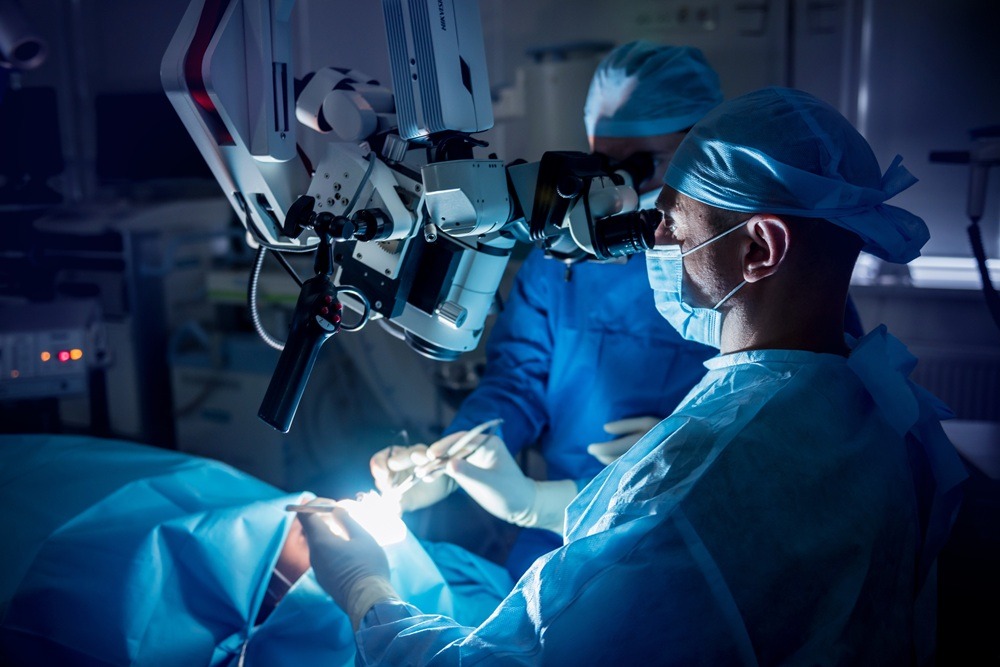
Surgeons can now remove many skull base tumors through the nose, using an endoscope and tiny instruments. This endoscopic approach avoids a large incision. Some tumors still need an open approach, especially if they wrap around a nerve or blood vessel. A tumor that wraps around the carotid artery needs extra planning, since the surgeon has to protect that artery while still removing as much of the tumor as safely possible.
Anyone weighing that decision can start by reading through what skull base surgery involves. That kind of detail helps someone know what to plan for before a consultation.
Recovery After Skull Base Tumor Surgery
Recovery from skull base tumor surgery depends heavily on which approach the surgeon used. People who have endoscopic surgery usually go home in two or three days. Open surgery can mean a longer hospital stay and a slower return to normal activity. Full recovery, including any nerve function the tumor affected, can take several months. Follow-up scans check for tumor regrowth for years afterward.
Finding the Right Specialist in San Diego
A skull base tumor needs a surgeon who operates in this region regularly, not someone who only handles a case like it once every few years. One way to check is to look at the full range of cranial and skull base conditions a practice treats. A practice that treats many different types is more likely to have handled a case like this one before.
Getting a second opinion before major skull base surgery is common, even when the first plan sounds reasonable. Before scheduling surgery, many people look into second opinion consultations built for this kind of decision. That extra review rarely changes the surgical plan, but it can change how confident someone feels going into it.
Comparing dedicated skull base training against general neurosurgery experience is one way to spot a top neurosurgeon in San Diego for this kind of case. That comparison takes a few minutes and can prevent a lot of second-guessing later.
What are the most noticeable symptoms?
Vision changes and one-sided hearing loss usually stand out the most, since both point toward damage to one particular nerve. A headache alone is harder to connect to this diagnosis without other symptoms alongside it.
Are these tumors usually cancerous?
Most skull base tumors are benign, meaning they do not spread to other parts of the body. Even a benign tumor can still need surgery if it presses on a nerve or grows near the brainstem.
How long does the surgery typically take?
Surgery time varies widely, from two or three hours for a smaller endoscopic case to six hours or more for a complex open procedure. The surgical team usually gives a time estimate once imaging shows the tumor’s size and location.
Living With a Skull Base Tumor Diagnosis: What Comes Next
A skull base tumor diagnosis rarely forces an immediate decision. Most cases allow time for imaging, a second opinion, and a real comparison of options before anything gets scheduled. That window deserves real use, since the surgeon and the approach chosen can affect the outcome as much as the tumor type itself.
Sources
Mayo Clinic – Skull Base Tumors
Johns Hopkins Medicine – Skull Base Tumors