
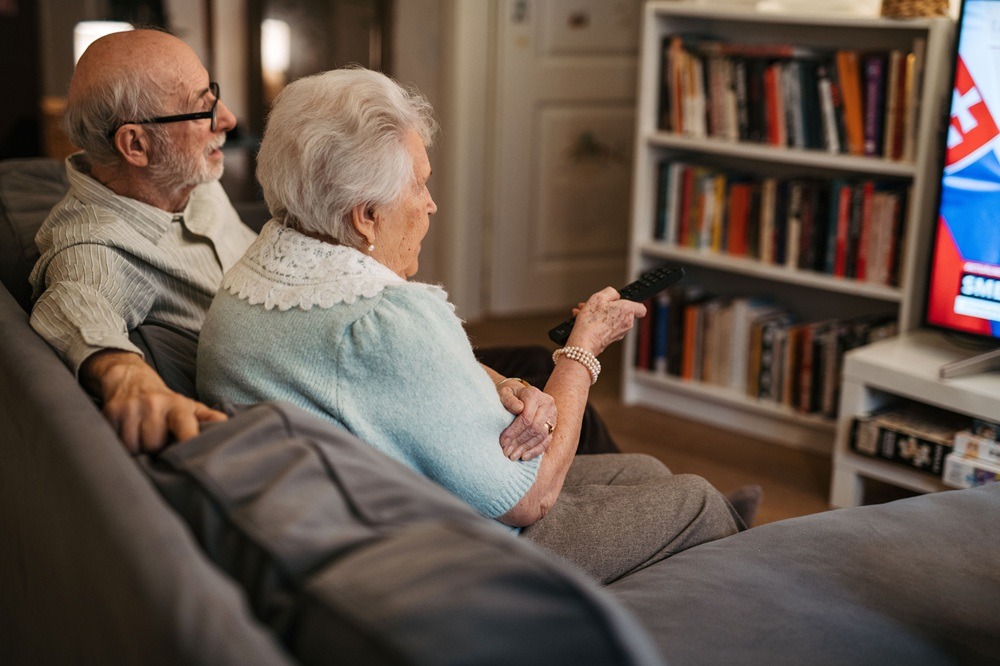
Senior inactivity rarely arrives as a single decision. A bad knee makes the morning walk harder to justify. A long winter moves someone from the yard to the couch. A health scare rearranges a month, and then three months pass without anyone fixing the schedule that got dropped. The recliner becomes the default not through one decision but through a dozen that nobody revisited. The body loses muscle, cardiovascular reserve, and the BDNF production that keeps neurons healthy the whole time. All of it runs in the background for months before a chair becoming hard to get out of makes any of it visible.
How Senior Inactivity Causes Muscle Loss
Muscle loss runs continuously, not just during obvious illness or recovery. After 40, adults lose roughly 8% of muscle mass per decade. After 65, that rate increases. The body’s ability to rebuild after a sedentary period becomes far less reliable.
Older adults tend to stay active through the specifics of the day, not through motivation. A work schedule that required being somewhere by nine. A walking group that met Tuesday and Thursday mornings. When those disappear, nothing replaces them automatically. The body starts losing muscle and cardiovascular reserve while the household is still adjusting to the missing routine. In Silver Spring, where older adults who have retired or lost a regular health routine often find their weeks going flat, companion care and daily engagement can put a fixed appointment back into Tuesday morning, or Wednesday afternoon, or whichever stretch of the week has gone empty.
The mechanism behind the acceleration is called anabolic resistance. In younger adults, muscle protein synthesis picks up fairly quickly after reduced movement. In older adults, that recovery is slower and often incomplete. A stretch of inactivity that a 45-year-old bounces back from in a week can leave a 70-year-old measurably weaker than before it started. Researchers who pooled results from multiple long-term studies found that physically active older adults had substantially lower rates of disability than inactive ones. The older the cohort, the larger that difference became.
The muscles that go first are the large leg and gluteal muscles. These handle getting out of a chair, catching a stumble, and walking on uneven ground. When they weaken, getting up takes more effort. Stumbling becomes more dangerous. Tasks that happened without thinking now need planning.
Senior Inactivity and the Seven-to-Ten-Day Window
Seven to ten days of reduced movement can produce measurable changes in muscle protein metabolism in adults over 65. Not months. A week and a half.
Researchers call this the catabolic crisis model. A period of immobility from illness, a fall, or losing the Tuesday-Thursday walk sets someone back past their starting point, not just to it. When activity resumes, full recovery is less likely in older adults than in younger people. A temporary slow period can leave someone measurably weaker than where they started.
Senior Inactivity and the Heart
A parent who walks for 30 minutes every morning and then sits for nine hours has not solved the cardiovascular problem. Those nine hours carry their own risk, separate from the walk.
When the body stops moving regularly, cardiac output drops and blood pressure climbs. Circulation through the lower legs slows. Blood starts pooling rather than returning efficiently to the heart. The body’s ability to process blood sugar weakens. Fat accumulates around organs instead of being used. A few months of sitting more than usual is enough for the numbers to move.
The Clot Risk That Happens in Armchairs, Not Just Hospitals
Deep vein thrombosis is a blood clot that forms in the lower leg when blood pools without movement. It is not only a hospital risk. It develops in armchairs too, in anyone sitting for hours without getting up.
Moving hurts, so a loved one moves less. That is a sensible response. Joint cartilage needs movement to stay lubricated. Muscles unused for a week lose some of the strength that made movement easier. After a few days of sitting, joints resist the first movement of the morning. That resistance makes avoidance more likely. Avoidance adds more resistance by the following week. Even modest, regular activity interrupts that cycle better than rest does. Researchers on chronic pain and movement have confirmed this consistently. The finding holds even at very low activity levels. Breaking the habit once it has settled requires an external reason to move, not just information about why it matters.
Senior Inactivity Is Now Linked Directly to Alzheimer’s
A 2025 study in Alzheimer’s and Dementia found that sedentary behavior is an independent risk factor for Alzheimer’s disease. Independent meaning the cognitive risk held even in adults who met weekly exercise guidelines but still spent most of each day seated. So the goal is not only a daily walk. It is fewer consecutive hours of sitting throughout the day.
Why Sitting Time and Exercise Are Not the Same Risk Factor
Without regular movement, the brain produces less BDNF, a protein that keeps neurons healthy and supports memory. That production drops off over weeks. It does not easily self-correct. Reduced blood flow delivers less oxygen to brain tissue at the same time.
Over seven years, those who sat more lost hippocampal volume faster. The hippocampus is the part of the brain most associated with forming new memories. Their processing speed and ability to retrieve words declined more steeply than in adults who moved more throughout the day.
None of this is dementia. But the changes are real, progressive, and start before any clinical sign appears. Moving more throughout the day slows them down.
The word “independent” in that finding is what matters most. The cognitive risk from sedentary time held even after accounting for physical activity levels. Someone who exercises regularly but spends most of the day in a chair is not as protected as they might assume.
Movement distributed across waking hours protects the brain differently than a single workout followed by hours of stillness. For an older adult who spent thirty years in a structured day and now spends most of one in a chair, the movement breaks that once came automatically now have to be created deliberately. In-home care in Silver Spring is one of the ways that happens. Someone arrives at a specific time for a specific reason, and Tuesday morning has something fixed in it.
Why the Body Protects Itself Into a Corner
A phone call telling someone to move more does not break the pain-avoidance cycle. What tends to break it is an external reason to be up at a specific time. A person coming over, an appointment that cannot be skipped, something that makes movement feel like part of the day rather than an effort added to it.
Three Months of Senior Inactivity and the Social Loop Nobody Sees Building
Exercise regulates dopamine, serotonin, and norepinephrine. Without it, mood becomes harder to manage and sleep gets worse. Worse sleep makes physical effort feel heavier the next morning. That makes movement less likely that day. The cycle runs through mood the same way the pain-avoidance cycle runs through joints.
A 2023 review in BMC Public Health pulled together data on sedentary behavior and mood across older adult populations. Anxiety, depression, and psychological distress all ran meaningfully higher in those who moved less. Inactivity and social isolation travel together in a way that is easy to miss. A senior who stops going out stops seeing people. Seeing fewer people makes going out feel less necessary. Families often notice the withdrawal well after it has been building. The parent who used to call every few days has gone three weeks without reaching out. They seem irritable during visits in a way that feels new.
Frequently Asked Questions About Senior Inactivity
How quickly does senior inactivity start to damage the body?
Measurable changes to muscle protein metabolism can begin within seven to ten days of reduced movement in adults over 65. That is not the same as visible weakness yet. The internal chemistry is already moving in the wrong direction, faster than it would in a younger person.
Can an older adult recover from a long period of senior inactivity?
Partial recovery is common. The sooner movement resumes, the better. Full recovery of muscle metabolism takes longer after 65 and is not always complete, but the body does respond. Starting small and staying consistent produces more actual recovery than waiting for a complete plan.
Is walking enough to prevent the effects of senior inactivity?
Walking is one of the best options for older adults starting from a sedentary baseline. Short daily walks produce measurable cardiovascular and cognitive benefits. Even ten minutes counts. The exercise guidelines for older adults are more forgiving than most people expect. An interrupted routine does not reset to zero. Anything that breaks a long stretch of sitting is doing useful work.
How can I help a parent who resists moving more?
A parent who will not walk with you might walk with someone who shows up at the door for a different reason. That relational distinction is real. It is one reason family caregiver support tends to accomplish things that family encouragement cannot. In the meantime, a walk to the mailbox counts. Most families come to this thinking about exercise. The actual target is which hours of the day are sedentary.
What Actually Works When Exercise Feels Like the Wrong Target
The target is usually set too high, which is why nothing happens. A fitness plan is the wrong unit. The right one is which specific hours of the day nobody moves.
Two things that work without anyone calling it exercise: folding laundry while standing, a walk to a neighbor’s house. Both interrupt the long stretches of sitting where the body deconditions fastest. Neither requires a plan.
A fixed reason to be somewhere at a specific time holds up better than motivation. A Tuesday morning that already has something in it is different from one that depends on feeling like it.
When a Parent Will Not Walk With You
Many seniors feel managed when a family member raises the topic of activity. Feeling managed produces the opposite of cooperation. Changing the target from getting them to exercise to reducing the hours of sitting often produces more actual movement. It is a smaller ask. It leaves the person feeling like the decision is still theirs. When a parent will not engage with family at all, someone who arrives with a scheduled purpose rather than a concern often accomplishes what the family could not.
What the Body Loses Before Anyone Realizes It
Senior inactivity is hard to address late. The interventions are simple. A month of muscle loss and two months of worsening mood have usually already run before getting out of a chair gets harder. By then the window for complete recovery has narrowed.
The muscle lost over the past month does not announce itself until getting out of a chair becomes noticeably harder. A parent who spent three months barely leaving the house is often irritable in ways that feel new to the family. The irritability comes from the inactivity, not from a personality change, not from age, but from months of missed movement.
A body sedentary for three months is doing something different than one sedentary for three years. At three months, muscle loss is still recoverable. Cardiovascular function still responds to movement. The mood depression that follows weeks of sitting tends to lift once the sitting reduces. Three years in, more of those corrections become partial rather than complete. Some do not happen at all.
Sources
- Physical Inactivity Among Adults 50 and Older — CDC
- Sedentary Behavior and Neurodegeneration in Aging Adults — Alzheimer’s and Dementia, 2025
- Consequences of Physical Inactivity in Older Adults — Scandinavian Journal of Medicine and Science in Sports, 2020
- Physical Activity in Older People: A Systematic Review — BMC Public Health