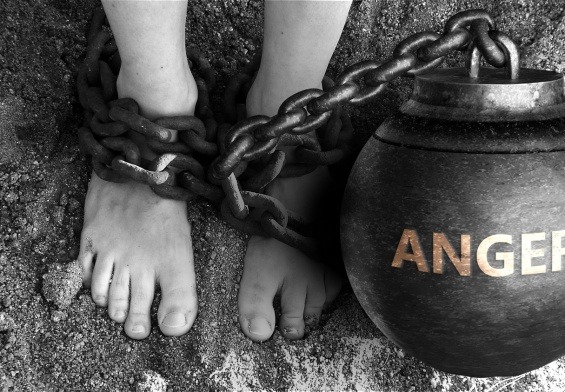

She keeps everything bottled up. Never raises her voice at work. Doesn’t argue with her partner; enduring every transgression with a smile. Just swallow the frustration and move on, or try to.
Eventually she ends up at a doctor for chest tightness, persistent fatigue, and a low-grade sense that something is wrong she cannot name. And then she’s blindsided by the referral to anger management therapy.
Most people picture someone needing anger management therapy as one of those people who raises their voice at meetings, slams doors, or ends up with a restraining order. They’re not thinking about the person who is extremely careful never to be any of those things. But chronic suppression is a clinical pattern with its own consequences, and most people carrying it never consider that they need anger treatment.
Quick Answer
Many people assume anger management therapy is for people who can’t control their temper. Suppression, holding anger in rather than expressing it, is also a clinical problem with documented physical and relational consequences. Effective anger therapy builds specific skills: recognizing anger early, interpreting triggering situations more accurately, generating non-reactive responses, and processing emotional experience rather than controlling or avoiding it.
What Anger Management Therapy Actually Addresses
Anger is a signal. It tells you something feels unfair, threatening, or wrong.
But when someone can’t process that signal properly, or express it in constructive ways, that’s where the problem begins.
Eradicating anger isn’t the goal here. It’s to recognize it, understand what’s causing it, and respond accordingly.
A 2025 study published in the Pakistan Journal of Professional Psychology (Zaki et al.) measured this directly. Participants who received third-wave Cognitive Behavioral Therapy (CBT) reduced clinical anger scores from an average of 2.60 to 1.75 out of 4.0, with a Cohen’s d of 1.74. The control group, which received standard counseling and psychoeducation, produced a d of 0.49.
The difference there didn’t lie in the topic, but the skills built by CBT.
The Two Faces of Anger That Both Cause Problems
Maladaptive anger has two distinct presentations. One of them hogs most of the attention.
When Anger Turns Inward
Maladaptive anger inhibition is the tendency to experience intense anger while rigidly suppressing its expression, not because the anger resolves, but because expressing it feels impossible or unsafe.
The person holds it in, triggering rumination about the original source. The rumination generates more anger. Suppression of that anger continues, but nothing resolves. It’s a ticking time bomb in many ways.
Research into Hwabyung, a Korean anger syndrome documented in a 2021 systematic review published in Frontiers in Psychiatry (Suh et al.), shows where this pattern leads.
Across seven studies, four patterns appear repeatedly: anger building in response to long-term stressors rather than isolated events, resentment directed at a specific person or situation, uncontrollable physical and emotional symptoms, and coping based on endurance rather than resolution.
These aren’t abstract, metaphorical feelings anymore. They’ve manifested into physical symptoms like chest tightness, heat sensations throughout the body, and a feeling of pressure in the throat.
Emotional explosions won’t solve the issue. They’re another symptom, the next stage of holding these emotions in for too long.
This pattern differs from depression in one important way. The anger remains directed outward, toward a person or situation. It’s not turned inward as self-blame.
The result is a familiar state: quietly furious about something that feels impossible to address.
When Anger Erupts Outward
The presentation most people associate with anger problems is explosive behavior, verbal aggression, impulsive outbursts, or actions that damage relationships.
Neuroimaging research shows this is not simply a failure of willpower.
A 2021 review in Clinical Child and Family Psychology Review (Matthys and Schutter) found impairments in specific functions: recognizing anger, generating appropriate responses, decision-making based on consequences, response inhibition, and affective empathy.
The behavior flows out from those impairments. Addressing behavior without addressing those underlying functions produces limited results.
What Suppressing Anger Does to Your Brain and Body
Suppressing anger won’t silence the brain about what’s causing it.
A 2025 review (Pelz) found increased activation in the anterior cingulate cortex and insula during active suppression. Conflict monitoring and awareness of internal bodily states involve these parts of the brain.
That means the brain works harder to contain the emotion.
Women tend to show more prefrontal cortex engagement, reflecting deliberate, effortful regulation. Men show patterns more consistent with automatic behavioral control. The same emotional state is being managed through different neural strategies.
Across both groups, chronic suppression is associated with increased anxiety and depression.
Over time, the body absorbs that cost. Long-term suppression activates stress pathways linked to cardiovascular strain and persistent fatigue.
This is where physical symptoms begin to appear. Chest tightness, chronic tension, and exhaustion are not separate from the emotional pattern. They’re how containing it too long manifests.
What Anger Management Therapy Actually Involves
Most people going in expect to talk about what happened. What unfolds with a certified anger management specialist is more concrete than that.
An anger diary tracks triggers, intensity, and frequency over time. That big picture reveals patterns that wouldn’t show up in isolated analyses.
An emotional thermometer builds awareness of escalation in the body. Most people are already reactive before they recognize their anger. Catching it earlier changes the outcome.
Cognitive work focuses on interpretation. The meaning assigned to the situation, not the situation itself, is usually the trigger. Thought records and guided questioning determine interpretation accuracy and what alternatives exist.
Mindfulness-based work creates space between stimulus and response. Observing anger without reacting to it interrupts automatic patterns.
For suppressors, the key shift is different. The urge being interrupted is not aggression, but a reflex to shut down and avoid.
DBT techniques like urge surfing treat anger as a wave that rises, peaks, and falls without requiring action. TIP skills, using cold exposure, brief intense movement, and paced breathing, act as rapid physiological resets in high-activation moments.
Communication training focuses on expression that does not escalate conflict. “I feel dismissed when the conversation ends before I finish” lands differently than any version of “you always.”
Values-based work examines whether habitual responses to anger align with what actually matters. Most people recognize a gap between how they react and how they want to act.
The STOP skill — stop, take a breath, observe, proceed — creates a structured pause that can be used in both explosive and suppressive patterns.
Why the “Control Your Anger” Approach Can Backfire
Standard CBT produces stronger outcomes for anger expression than for suppression.
Control-based strategies work when the problem is impulsive behavior.
For someone who already over-controls their emotional expression, those same strategies reinforce avoidance. They improve the ability to suppress without resolving anything underneath.
A 2025 study (Larsson et al.) tested an alternative approach focused on emotional processing. The effect size for anger inhibition reached d=1.26, significantly higher than typical CBT outcomes for the same pattern.
There’s a simple implication here. Suppressors and expressors need different approaches. Treating them the same limits results.
Anger in Close Relationships
Anger is most often suppressed where it matters most.
In close relationships, expressing it feels costly. But suppressing it leads to repeated situations going unaddressed.
Over time, resentment builds. When it surfaces, its scale blows the moment itself out of the water.
The person on the receiving end has no context for where it came from or how long it has been building.
This is one of the patterns couples counseling is specifically designed to work with. Not the presence of anger in a relationship, but the burden of everything unspoken. The relational cost of unexpressed anger runs long and deep. Anger doesn’t just go away when it’s not expressed.
When to Seek Anger Management Therapy
Anger that feels impossible to express, even when it would be appropriate, is itself a clinical sign.
Other indicators include:
- Physical symptoms such as chest tightness, headaches, or chronic tension
- Persistent rumination after triggering events
- Repeating the same unresolved conflict in close relationships
- Misdirected or disproportionate anger
- Impact on work, relationships, or health
- Court or ACS referral
CBT is most effective when it is tailored to the individual pattern rather than applied as a fixed program.
Kelly Gorsky, a licensed mental health counselor and certified anger management specialist in Staten Island, works with both voluntary clients and court-mandated cases. Her approach focuses on identifying patterns, understanding triggers, and building practical alternatives that can be used in real situations.
Frequently Asked Questions About Anger Management Therapy
Is anger management therapy only for people who have violent outbursts?
No. Many people entering therapy have never had a visible incident. The problem is what they do not express, not what they do.
What is the difference between CBT and third-wave CBT for anger?
Traditional CBT focuses on changing thoughts and behavior. Third-wave approaches add acceptance, mindfulness, and values-based decision-making. Research shows this combined approach produces stronger results.
Can suppressing anger cause physical health problems?
Yes. Suppression increases activity in brain regions linked to stress and body awareness and is associated with anxiety, depression, and long-term physiological strain.
How many sessions does anger management therapy take?
This varies. Some structured programs run 8 to 14 sessions, while individual therapy adjusts based on the person’s needs.
What happens in the first session?
The first session focuses on understanding patterns, identifying triggers, and beginning tools like the anger diary to track what is happening over time.
What Anger Is Actually Trying to Tell You
Anger is information. It signals that something feels unfair, threatening, or wrong.
Whether it shows up as explosive behavior or silent accumulation, the message is the same. Something in the situation is not working, and the current response is not resolving it.
Therapy does not remove that signal. It builds the ability to recognize it, understand it, and respond in a way that actually addresses what is happening.
Remember, you’re not trying to change the way you feel anger, but how you react to it.
Sources
Benjamin Pelz. (2025). The Neuropsychological Consequences of Anger Suppression: A Review of Sex Differences and Clinical Implications: Research Article. American Journal of Medical and Clinical Research & Reviews, 4(1), 1–33. https://doi.org/10.58372/2835-6276.1246
Larsson, J., Ojala, O., Bjureberg, J., Sederström, P., Hvass, O., Björk, P., … Hesser, H. (2025). Online emotion regulation treatment for maladaptive anger inhibition – an open-label pilot with a pooled interrupted time series design. Cognitive Behaviour Therapy, 1–16. https://doi.org/10.1080/16506073.2025.2542355
Matthys W, Schutter DJLG. Increasing Effectiveness of Cognitive Behavioral Therapy for Conduct Problems in Children and Adolescents: What Can We Learn from Neuroimaging Studies?. Clin Child Fam Psychol Rev. 2021;24(3):484-499. doi:10.1007/s10567-021-00346-4
Suh H-W, Lee K-B, Chung S-Y, Park M, Jang B-H and Kim JW (2021) How Suppressed Anger Can Become an Illness: A Qualitative Systematic Review of the Experiences and Perspectives of Hwabyung Patients in Korea. Front. Psychiatry 12:637029. doi: 10.3389/fpsyt.2021.637029
Zaki, Sidra & Samreen, Saniya & Arouj, Dr. (2026). Effectiveness of Third Wave CBT Techniques for Anger Management among Pakistani University Students. PJPPRP. 16. 10.62663/pjpprp.v16i2.257.