Adjacent segment disease can be the culprit if your back or neck pain comes back after a successful fusion. That doesn’t mean the operation failed; the key elements are in the name. The words “adjacent segment” mean the next segment above or below is the one causing problems. But confirming that takes work, so let’s explore how doctors diagnose adjacent segment disease and why you pain can come back after a successful fusion.
Quick Answer
Adjacent segment disease develops when changes in a spinal level next to an earlier fusion cause new symptoms, such as pain, numbness, or weakness. These problems may appear years after surgery. Degeneration visible on scans is more common than symptomatic disease. Treatment depends on whether the findings explain the symptoms, and another operation isn’t always necessary.
Why a Nearby Spinal Level Can Become Painful
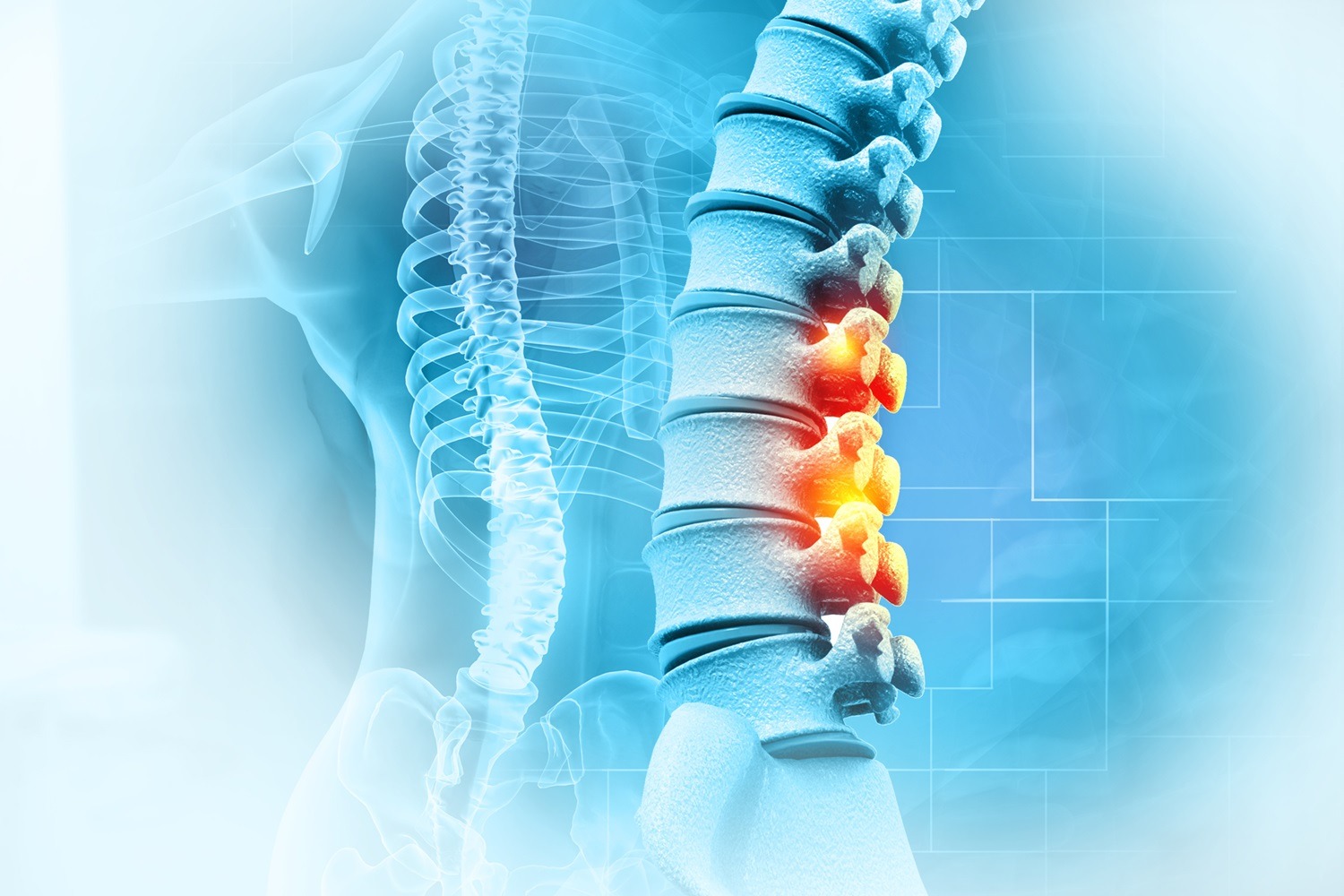
A spinal fusion joins two or more vertebrae so they can’t move. The discs and joints above and below the fusion can still move. Wear and tear from that can cause neighboring discs to lose height, joints to develop arthritis, or the space around nerves to narrow.
So the question becomes “how much of that deterioration is the fusion responsible for?” Just like the rest of the body, discs can change with age and naturally degenerate. It’s not uncommon for the adjacent segments to have degenerated before the fusion.
That’s why doctors separate adjacent segment degeneration, which describes changes visible on imaging, from adjacent segment disease, which involves symptoms associated with those changes.
New Pain After Fusion Doesn’t Always Mean Adjacent Segment Disease
Say you had a lumbar fusion for pain in one leg five years ago. The original pain went away after the surgery, but now you’re getting a similar pain in the other leg.
That’s definitely cause for concern and worth getting checked out, but you can’t jump to the conclusion the fusion failed. This could happen for any number of reasons, such as a neighboring disc pressing on a nerve, spinal stenosis, or a host of unrelated problems.
In the lower back, adjacent segment disease can cause back pain, pain traveling into a leg, or heaviness in the legs during walking. Some people find that sitting or leaning forward eases those walking symptoms. After a cervical fusion, the symptoms may involve neck pain or symptoms in an arm or hand, including pain, tingling, and weakness.
New trouble with balance, hand coordination, or strength deserves prompt medical assessment because it can indicate spinal cord or nerve compression. Any new loss of bladder or bowel control, especially with numbness around the groin or rapidly worsening weakness, requires emergency evaluation.
Pain that never improved after the first operation raises different questions. Incomplete nerve decompression, a fusion that didn’t heal as intended, or a non-spinal pain source may be involved.
What the Scans Can Tell You
An MRI can show a herniated disc, narrowing around the nerves, or degeneration at a level bordering the fusion. Flexion-extension X-rays, taken while bending forward and backward, can help identify abnormal movement. A CT scan may be useful when the surgeon needs a clearer look at bone or whether the original fusion healed solidly. None of those findings proves the source of pain on its own.
This is where the distinction between degeneration and disease matters. A review of 83 cervical-spine surgery studies, published in Medicine in 2016, found:
- Radiographic adjacent segment degeneration in approximately 28% of patients.
- Symptomatic adjacent segment disease in approximately 13%.
- Reoperation for adjacent segment disease in approximately 6%.
Those are pooled estimates from studies with different patient groups and follow-up periods, not three stages that every patient moves through.
It bears mentioning that no two people are alike, however. Everyone’s body is different, and two people can have the same MRI findings even while they’re experiencing different symptoms. The surgeon’s job is to match what they see on imaging with the location of the pain, the neurological examination, and the patient’s surgical history.
What Can You Still Do After a Spinal Fusion?
What’s done is done, and the original operation can’t be reversed. There’s no proof exercise or lifestyle changes can prevent adjacent segment disease, either. But there are a few things you can talk to your spine specialist about.
The first is physical therapy. Undergoing physical therapy can support your trunk and give you better control over your body. Try to set realistic goals like walking further, sitting longer, and lifting with better control than before.
The other is managing your weight. Higher BMIs can be risk factors for a myriad of health problems, including spine and joint issues. While there isn’t much evidence that losing weight can outright prevent adjacent segment disease, it’s one of the best things you can do for your body and can definitely alleviate some symptoms.
Key Takeaways Before Your Follow-Up Visit
- Write down when the new pain began, where it travels, and whether it feels different from the symptoms before your first surgery.
- Ask whether the imaging findings match your symptoms or could be unrelated age-associated changes.
- Find out whether the original fusion is solid and whether the neighboring level shows nerve compression or instability.
- Discuss realistic rehabilitation options and what can be done to maintain strength and mobility.
- If another operation is proposed, ask what problem it would correct and why that procedure is preferable to the alternatives.
What Patients Ask About Adjacent Segment Disease
How Is Adjacent Segment Disease Treated?
Treatment often begins with nonsurgical treatments such as physical therapy, appropriate medication, or an injection to calm inflammation around an irritated nerve. Surgery becomes a consideration when symptoms remain disabling or when nerve compression, spinal cord compression, or instability requires it. Some patients need decompression to relieve pressure on a nerve, and others need the previous fusion extended. That is one reason revision spine surgery requires a careful review of the first operation, current anatomy, and the cause of the new symptoms.
When Should I Get a Second Opinion?
Before another spine operation, especially if the pain source remains uncertain, the plan would extend an existing fusion, or different surgeons have recommended different approaches. An independent spine surgery second opinion can offer another read of the imaging and clarify the tradeoffs between continued nonsurgical care, decompression, and additional fusion.
Can Adjacent Segment Disease Return After a Second Surgery?
Yes. If a fusion is extended, the levels bordering the longer fusion can also degenerate over time, though another operation isn’t inevitable. A surgeon proposing revision should explain how it may affect the remaining mobile levels.
Bring the Old Records to the New Appointment
The original operative report, information about implanted hardware, and scans from before and after the first fusion show how the spine looked before the current symptoms began. Comparing them with new studies can help separate longstanding degeneration from a recent change and show whether the original fusion healed. If those records are spread across hospitals or imaging centers, request them before the appointment, and ask for the actual imaging files, not just the written reports.
Sources
American Association of Neurological Surgeons: Artificial Cervical Disc Surgery