
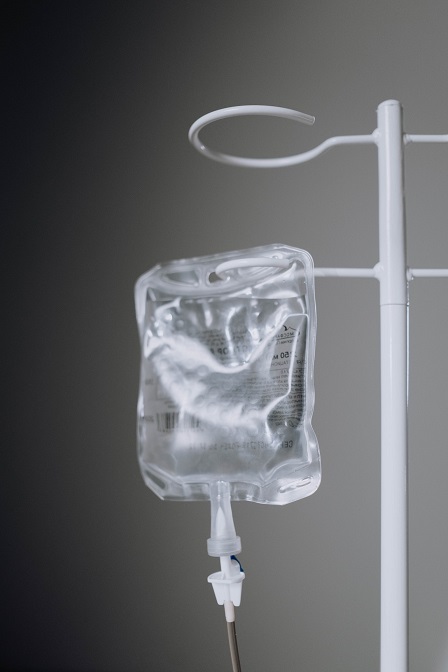
IV therapy has moved well beyond hospital walls. Wellness centers, mobile providers, and clinics now offer it for dehydration recovery, chronic illness support, and general wellness. They make a lot of claims regarding IV therapy benefits, which do not always stand up to the same scrutiny as clinical medical claims.
IV therapy delivers fluids, electrolytes, vitamins, or minerals directly into the bloodstream through a vein. A separate guide covers the specific formulations and types of IV drips and how they gained popularity in wellness culture.
What IV Therapy Is and Why It Absorbs Differently
IV therapy delivers fluids, nutrients, or medications directly into a vein. The body absorbs whatever is administered much more quickly because it bypasses the digestive system. When the body is in need of fluids or electrolytes, or the digestive system cannot absorb nutrients reliably, IV delivery can provide what oral intake cannot.
According to Cleveland Clinic, IV fluids are used for people who are sick, injured, or dehydrated from exercise or heat, as well as for those undergoing surgery. They describe intravenous rehydration as a simple, safe, and common procedure with a low risk of complications.
There is a growing body of research focused on determining the specific situations that call for IV delivery over oral approaches, and whether that makes a real clinical difference beyond delivery speed.
IV Therapy Benefits Supported by Clinical Evidence
Dehydration and Fluid Recovery
When the body has lost significant fluids and electrolytes through illness, heat exposure, or surgery, IV delivery restores them quickly and directly.
Cleveland Clinic notes that IV vitamin therapy can quickly restore the body’s fluid levels while replenishing essential electrolytes. This makes it a potentially useful recovery tool for stomach flu, muscle cramps, and similar conditions involving significant fluid loss.
Adjunctive Support for Chronic Conditions
IV vitamin therapy may be beneficial as an adjunctive treatment for chronic illnesses, meaning it may complement primary care for certain conditions but cannot replace it. IV therapy cannot treat chronic illnesses, but it may support care for people already managing them.
People working within a structured disease management program sometimes receive IV therapy as one component in a coordinated approach. That changes the question from “does IV therapy work?” to “does IV therapy fit appropriately into this care plan?” Questions like those should always go to a treating clinician, not a wellness provider. Disease management programs vary considerably in how and whether they incorporate adjunctive treatments.
What Most Wellness IV Claims Are Missing
A study on the science behind intravenous vitamin therapy published in Cureus found that wellness-focused claims, including faster recovery from exhaustion, improved energy, and skin benefits, are primarily based on self-reported experiences rather than clinical evidence. There are currently no large-scale randomized controlled trials supporting these claims.
The same review identified some specific mechanisms with more backing. IV administration of vitamin C may enhance leukocyte function, supporting the immune system’s capacity to respond to infection and inflammation. IV amino acids, B vitamins, and magnesium are noted as potentially beneficial for those engaged in strenuous physical activity and muscle recovery. These are more precise than general wellness claims, but have not yet been confirmed by large-scale trials.
Cleveland Clinic documented a small fibromyalgia study in which participants reported improvements in pain, depression, and quality of life after eight weeks of IV vitamin therapy. There was no significant difference, however, between the IV group and the placebo group. People in both groups reported similar outcomes, which is something worth remembering when evaluating any wellness IV claims.
A separate guide covers hydrogen peroxide IV therapy, a specific formulation that operates outside the standard vitamin and nutrient delivery context.
Who IV Therapy May Actually Help
People recovering from gastroenteritis, high fever, prolonged vomiting, or dehydration from heat exposure are among those Cleveland Clinic identifies as candidates for IV rehydration. Bypassing the digestive system accelerates fluid restoration and can make a clinically significant difference in these situations.
Chronic illness is a different conversation. IV therapy used as adjunctive care, alongside rather than instead of primary treatment, has a reasonable basis in Cleveland Clinic’s guidance. Whether it fits within a particular person’s care plan depends on the condition and the clinician.
General wellness use for otherwise healthy individuals is where the evidence falters. The Cureus review found the claimed benefits in these cases to be primarily anecdotal. That means study participants reported feeling better, but the available data does not yet provide quantifiable clinical confirmation of those outcomes.
Risks and What to Watch For
Cleveland Clinic describes standard IV fluid therapy as simple, safe, and common, with a low risk of complications. As with any procedure involving vein access, there are signs worth monitoring.
Cleveland Clinic advises patients to tell their provider if they experience discomfort at the IV site, a loose IV needle, headache, or trouble breathing during or after a session.
The quality and sterility of IV preparations vary by provider, which makes confirming a provider’s credentials and preparation standards more important than it might first appear.
How IV Therapy Benefits Compare to Oral Supplementation
Significant dehydration and a compromised digestive system are the situations where IV therapy has the clearest clinical case. When someone cannot absorb nutrients orally because of illness, vomiting, or a malabsorption condition, IV delivery can provide what oral supplementation cannot. Cleveland Clinic identifies this as the context where IV fluids have their clearest clinical application.
The Cureus review found that claimed IV therapy benefits in the wellness context lack support from large-scale randomized controlled trials, with those claims resting primarily on self-reported experience. Whether that reflects a genuine absence of effect or simply insufficient research is something the current evidence does not resolve.
The body still metabolizes, stores, and uses nutrients through the same pathways regardless of how they arrived. Getting something into the bloodstream faster and the body using it more effectively are not the same thing. A closer look at how the body processes nutrients shows why that distinction is worth holding onto.
What to Know Before Seeking IV Therapy Benefits
A provider offering IV therapy for dehydration recovery is working in well-established clinical territory. A provider offering IV therapy for general energy or immune support is working in an area with thinner evidence, and patients are better served by examining specific claims before agreeing to any sessions.
The kind of health education that helps most here is specific: knowing the difference between what has been confirmed in clinical settings and what remains anecdotal changes how a patient evaluates what they are being offered. Someone who walks into an IV therapy consultation with that distinction already in mind is better positioned to ask the right questions.
Before starting, it is reasonable to ask: what is in the formulation, who prepared it, what credentials does the clinician hold, and what monitoring happens during and after the session. If IV therapy is being considered for a specific medical condition rather than general wellness, that conversation belongs with the treating physician first.
Frequently Asked Questions
How often can you get IV therapy?
Frequency depends on why someone is getting it. Clinical dehydration often requires only one session. Adjunctive chronic illness support would be scheduled by a treating care team. No standard frequency has been established for general wellness use, which means frequency decisions in that context are largely provider-driven rather than evidence-driven.
Does IV therapy actually boost energy?
Energy improvement is one of the most commonly reported outcomes and one of the least confirmed. The Cureus review found that energy claims are primarily based on self-reported experiences rather than randomized controlled trials. People often feel better after a session, and that experience is real, but clinical trials have not yet established why or for whom that effect is reliably reproducible.
Is IV therapy the same as what hospitals use?
The delivery mechanism is the same: a needle into a vein connected to a bag of solution. The contents differ. Hospital IV fluids are usually saline, dextrose, or electrolyte solutions used for specific clinical purposes. Wellness IV formulations add vitamins, minerals, and amino acids. The strong clinical track record that exists for hospital IV fluids does not carry over automatically to the broader wellness formulations.
How do I know if IV therapy is right for me?
A clinician who knows your health history is the right starting point. People with kidney disease, heart conditions, or anything affecting fluid regulation should not begin IV therapy without medical clearance. For most people, the conversation starts with identifying what specific outcome is being sought, whether that is dehydration recovery, chronic illness support, or general wellness, because the evidence behind each of those situations is meaningfully different.
What the Evidence Leaves Open
The clearest finding across all of this is that IV therapy and IV vitamin therapy are not the same thing in practice, even though they use the same delivery mechanism. The evidence base that makes IV rehydration reliable in clinical settings does not automatically extend to IV vitamin drips offered for wellness goals, and most providers marketing the latter do not draw that distinction clearly.
Holistic wellness services that offer IV therapy alongside other options give patients a better framework for evaluating it, because the conversation is less likely to stop at “it works” and more likely to go further: works for what, in which situations, and compared to what alternatives.
Sources
- Alangari A. To IV or Not to IV: The Science Behind Intravenous Vitamin Therapy. Cureus. 2025 Jun 22;17(6):e86527. doi: 10.7759/cureus.86527. PMID: 40548149; PMCID: PMC12182718.
- https://health.clevelandclinic.org/iv-vitamin-therapy
- https://my.clevelandclinic.org/health/treatments/21635-iv-fluids