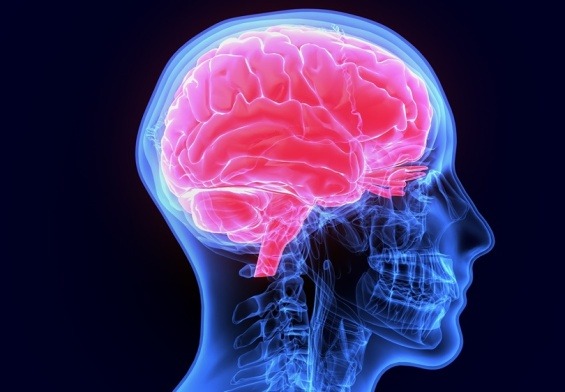

Hydrocephalus in adults goes undiagnosed for longer than it should. The condition does not announce itself. A shuffle that gets blamed on bad knees. Memory lapses that seem like early aging. Frequent trips to the bathroom that no one connects to the brain. Each symptom has a more obvious explanation. Hydrocephalus in adults goes unidentified until someone asks why all three are happening at once.
What Hydrocephalus in Adults Looks Like
Cerebrospinal fluid, or CSF, flows continuously through the brain’s ventricles and around the spinal cord, cushioning the brain and clearing metabolic waste. When a blockage disrupts that flow, or when the brain loses the ability to absorb CSF, fluid accumulates and pressure builds inside the skull. How the condition presents depends on which part of that system is failing and how quickly.
Normal pressure hydrocephalus, the most common adult form, develops slowly. The three hallmark symptoms are gait disturbance, cognitive decline, and urinary urgency or incontinence. Gait problems arrive first in most cases, preceding cognitive changes by months or sometimes years. By the time memory is noticeably affected, the person has usually already seen a specialist for Parkinson’s disease, early dementia, or orthopedic problems.
When a blockage inside the ventricular system prevents CSF from moving through, the condition is called obstructive hydrocephalus and it develops faster. Headache, nausea, vomiting, and blurred vision are the characteristic symptoms. A tumor, cyst, or blood clot typically explains the obstruction, and the treatment follows directly from identifying it.
Secondary hydrocephalus develops after a brain injury, stroke, infection, or tumor and follows a timeline determined by whatever caused it. Symptoms can resemble either the NPH pattern or the obstructive pattern depending on where the disruption occurred and how fast fluid is accumulating.
Patients who have already received imaging and know what they are dealing with arrive at surgical planning with specific questions about hydrocephalus treatment options. Which approach fits depends on the type and whether imaging confirmed a structural cause. The surgeon and patient can move faster through that consultation when the diagnosis is already clear.
What Causes Fluid Buildup in the Brain
The choroid plexus inside the ventricles produces CSF continuously. It circulates around the brain and spinal cord, then drains back into the bloodstream through structures called arachnoid granulations. Any breakdown at production, circulation, or drainage can produce hydrocephalus.
In adults, the underlying cause differs significantly from what produces the condition in children. Idiopathic normal pressure hydrocephalus, the most common adult form, has no identified obstruction. Reabsorption fails without a clear structural reason, and CSF accumulates gradually. The National Institute of Neurological Disorders and Stroke identifies NPH as among the most reversible causes of dementia-like symptoms in older adults. NPH being reversible changes how the three-symptom triad should be evaluated in anyone over sixty.
When an obstruction is present, the cause is usually more identifiable. A tumor blocking ventricular drainage, blood from a stroke scarring the arachnoid granulations, and traumatic injury disrupting CSF dynamics can all produce the same imaging pattern. Each mechanism differs; the imaging pattern looks similar.
Hydrocephalus from a tumor near the ventricles falls within skull base tumor management. Removing or reducing the mass addresses the obstruction directly, which is a different surgical problem than managing idiopathic fluid accumulation. What the imaging shows determines which path the treatment takes.
How Hydrocephalus in Adults Is Diagnosed
Why the Diagnosis Gets Missed
Each symptom in the NPH triad has a readier explanation. Gait problems in older adults get attributed to arthritis, peripheral neuropathy, or Parkinson’s disease. Memory lapses get attributed to early Alzheimer’s or age-related cognitive decline. Urinary urgency gets attributed to an overactive bladder. Evaluated one at a time, none of them points toward the brain as clearly as when all three show up together.
Hydrocephalus in adults follows the same pattern of delayed recognition seen in other slow-moving neurological conditions. Acoustic neuroma symptoms follow the same trajectory, where no single symptom is alarming enough to prompt imaging until several accumulate.
MRI is the primary diagnostic study. It shows ventricular enlargement, changes in the periventricular tissue, and whether the enlargement is disproportionate to the degree of cortical atrophy. A brain that has shrunk from aging produces ventricular enlargement as a byproduct. Hydrocephalus produces it from pressure. A well-read MRI can tell the difference: aging pulls the brain away from the skull, while hydrocephalus pushes fluid against it from inside.
A tap test is a diagnostic step that most general practitioners and even some neurologists do not order. The procedure removes 30 to 50 milliliters of CSF via lumbar puncture, and the clinician observes gait over the following 24 to 48 hours. Improvement in gait confirms that the symptoms are pressure-related and predicts how well the patient will respond to surgical shunting. StatPearls, published through the National Library of Medicine, identifies tap test response as the strongest predictor of shunt success in NPH patients. Patients whose gait improves after the tap test have substantially better outcomes from surgery than those who show no response.
Treatment Options for Hydrocephalus in Adults
The ventriculoperitoneal shunt, or VP shunt, is the most established surgical treatment for hydrocephalus. A catheter placed in one of the ventricles drains excess CSF to the abdominal cavity, where the peritoneum absorbs it. Modern shunts include programmable pressure valves, so a neurosurgeon can adjust the drainage setting non-invasively after implantation without reoperation.
Endoscopic third ventriculostomy creates an opening in the floor of the third ventricle, allowing CSF to bypass an obstruction and drain through a natural pathway. ETV works for obstructive hydrocephalus where there is a clear blockage, and it avoids long-term dependence on a shunt device. NPH involves a failure of absorption, not a structural blockage. ETV bypasses an obstruction; it does not restore absorption.
When a tumor or cyst is causing the obstruction, addressing that mass directly is the first approach. CyberKnife radiosurgery can reduce or eliminate a mass causing obstructive hydrocephalus without an open surgical incision. When the mass is the sole cause of the blockage, treating it can resolve the hydrocephalus entirely.
Imaging reviewed by a neurosurgeon experienced in hydrocephalus confirms the cause of obstructed CSF flow. Treatment follows from what the scan shows. A VP shunt placed for NPH when the actual cause is a slow-growing tumor treats the drainage problem while leaving the mass untreated.
Questions People Ask About Hydrocephalus in Adults
Can hydrocephalus in adults be cured?
NPH responds to shunting in approximately 50 to 80 percent of carefully selected patients. The tap test improves the odds of identifying who will benefit. Obstructive hydrocephalus from a tumor that surgery or radiosurgery has resolved can clear fully. Whether improvement reaches the level of cure depends on the cause and how long the pressure built up before treatment began.
Is hydrocephalus the same as water on the brain?
Yes. Both phrases describe the same condition. CSF is the fluid involved. The accumulation and the pressure it creates are what both terms point to. Hydrocephalus is the medical term; water on the brain is the older lay version.
How is hydrocephalus in adults different from hydrocephalus in children?
In children, hydrocephalus is usually congenital or tied to a developmental condition. In adults, the most common form develops after a brain injury, infection, hemorrhage, or for no clearly identified reason. An adult skull cannot expand the way an infant’s can, so pressure builds inside a fixed space instead. NPH also develops slowly enough that its symptoms get attributed to aging before anyone considers imaging the brain.
When to See a Neurosurgeon
Gait problems, cognitive changes, and urinary urgency appearing together in an older adult without a confirmed explanation for each one are enough reason to order brain imaging. No single symptom in that group is specific to hydrocephalus, but the combination is.
Post-hemorrhagic, post-infectious, or post-traumatic headaches that worsen steadily over weeks without improving warrant imaging as well. Hydrocephalus developing after a neurological event does not always make itself obvious right away, and symptoms can emerge well after the original injury has stabilized.
NPH remains one of the few causes of dementia-like symptoms in adults that can be reversed. Patients managed for early Alzheimer’s or Parkinson’s without brain imaging, who also have gait and bladder symptoms, have a real chance of improvement if the diagnosis changes. Neurologists and neurosurgeons who work in this area note that NPH is the presentation most likely to go unrecognized before a dementia diagnosis is finalized.
Sources:
Hydrocephalus Fact Sheet, National Institute of Neurological Disorders and Stroke
Normal Pressure Hydrocephalus, National Library of Medicine